

Gen Con 2026 Game Design Academy: How to Break Into the Tabletop Industry

2026-07-31
Learn how to attend the Gen Con 2026 Game Design Academy, choose between Explorer and Student tracks, earn a game design certificate, and start your tabletop industry career.
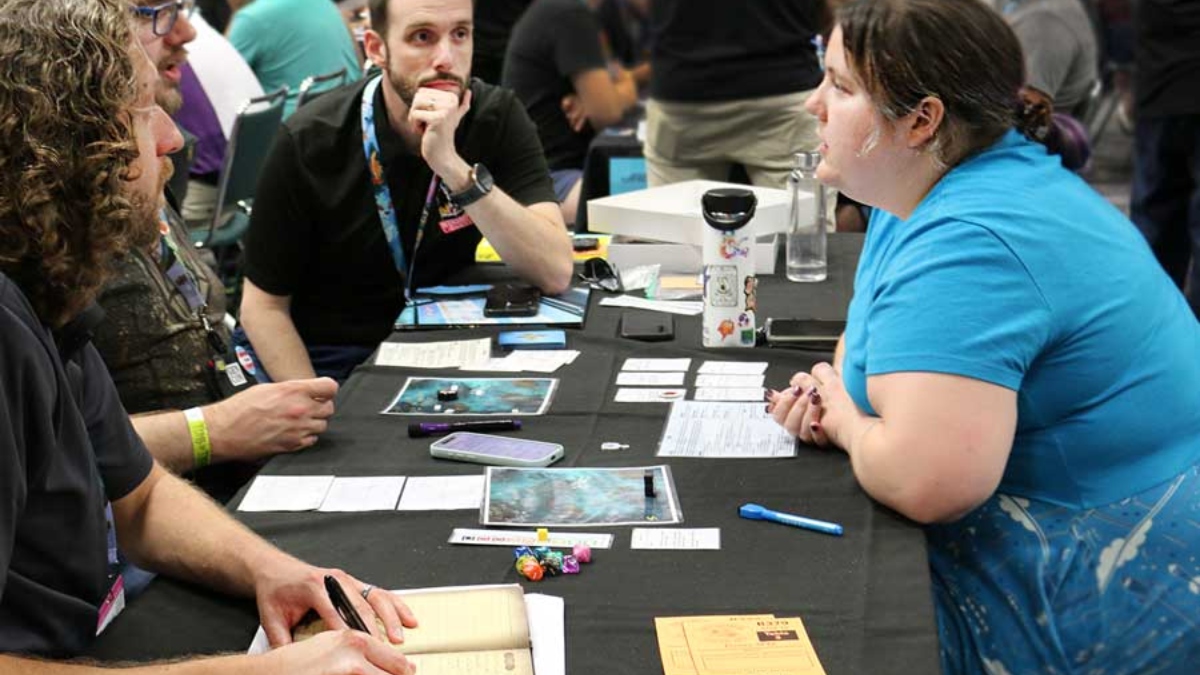
Gen Con 2026 runs July 30 through August 2 in Indianapolis. For anyone who wants to turn a board game hobby into a tabletop industry career, the Game Design Academy is where that starts. This guide covers what the Gen Con Game Design Academy offers, how the two tracks work, what you need to do to register, and how to get the most out of the experience once you're there.

If you've been designing games in your spare time, teaching game design in a classroom, or are just curious about what goes into publishing a tabletop title, the GDA gives you direct access to working designers, educators, and publishers. You'll leave with practical skills, industry connections, and if you complete the Student Track, a game design certificate to back it up.
1. What the Gen Con Game Design Academy Actually Is
The Gen Con Game Design Academy (GDA) is an immersive learning experience built into Gen Con Indy. It runs curated hands-on workshops, inspiring seminars, and specialized panel events led by game design academics and industry professionals. The program provides practical skills, industry insights, expert knowledge, and networking opportunities to help participants enter the tabletop gaming industry.
Think of it as a game design education bootcamp embedded inside North America's largest tabletop convention. You get four days of programming plus a bonus Wednesday of activities tied to Trade Day, all focused on teaching you how games are designed, published, and brought to market.
The GDA is a branch of Trade Day, which means it shares that professional development infrastructure. Trade Day itself is a full-day program on Wednesday, July 29, 2026, designed for educators, professors, librarians, health professionals, mental health therapists, and hobby retailers. By selecting "Game Designer" as your Trade Day participation type, you get access to GDA programming starting Wednesday and continuing through all four days of the convention.
2. Choosing Your GDA Track: Explorer vs Student
One of the first decisions you need to make is which track fits your goals. The Gen Con Design Academy offers two paths, built for different levels of commitment.
The Explorer Track
The Gen Con Explorer Track is designed for individuals who want to learn more about tabletop game design without a full commitment to the Student Track curriculum. You pick and choose the sessions that interest you. Maybe you want to sit in on a seminar about game balancing one afternoon and browse the exhibit hall the next. The Explorer track gives you that flexibility.
This track works well if you're already attending Gen Con for the gaming and want to sample some game design education sessions alongside your regular convention schedule. No curriculum requirements. No certificate. Just access to the learning.
The Student Track
The Gen Con student track is intended for those interested in pursuing a career in game design. Participants who register as Students and complete the curriculum are eligible to receive a certificate of completion. That certificate signals to publishers and employers that you have gone through structured training recognized by Gen Con and its academic partners.
Student track events begin on Wednesday, coinciding with Trade Day. Throughout the convention's four days, additional GDA events are available for participation. The Student track is more structured. There's a curriculum you need to complete to earn the certificate. If you're serious about a tabletop industry career, this is the track that gives you the most directed experience and the credential to show for it.
3. How to Register for the Game Design Academy
Registering for the GDA takes a few steps, and it starts with getting the right badge. Here is the process:
- Apply for a Trade Day badge. The GDA is part of Trade Day, so you need a Trade Day badge rather than a standard Gen Con attendee badge. Badge applications are open to adults 18 and older, and the application is reviewed before approval. The Trade Day badge costs $302 and gives you access to Trade Day programming on Wednesday plus all four days of Gen Con.
- Select "Game Designer" as your participation type. When filling out the Trade Day badge application, you must choose a participation type. To access GDA programming, select "Game Designer." This designation tells Gen Con to route you into the Game Design Academy track.
- Wait for event registration to open in May. Once event registration opens, search for "Game Design Academy" in the Gen Con event catalog using the "Company" field. This pulls up all GDA-curated workshops, seminars, and panels. You can then add individual events to your schedule.
- Plan your schedule around the curriculum. If you're doing the Student track, look for the curriculum requirements published by the GDA coordinators. Student track events begin on Wednesday, so plan to arrive in Indianapolis by Tuesday evening.
- Subscribe to the GDA newsletter. Gen Con runs an exclusive email newsletter for the Game Design Academy that shares updates about curriculum, coordinators, and registration details. You can subscribe through the Gen Con website.
One thing to note: the Trade Day badge is separate from the standard 4-day Gen Con badge. The $302 Trade Day badge includes both the Wednesday Trade Day programming and all four days of Gen Con, so you don't need to buy a second badge for the convention itself.
4. GDA 2026 Guests of Honor: Helaina Cappel and Geoff Engelstein
Each year, the Game Design Academy hosts Guests of Honor who are recognized game designers and industry professionals. For 2026, Gen Con has selected Helaina Cappel and Geoff Engelstein, two figures whose careers cover very different paths into the tabletop industry.
Helaina Cappel
Helaina Cappel is a school teacher and lifelong board game fan who turned her passion into a publishing career. In 2015, she founded Kids Table Board Gaming (KTBG) after looking for interesting games to play with her kids and deciding she would just make some herself. Teaming up with her husband, she designed, funded, and published games including Foodfighters and Haunt the House.
Over the next decade, Helaina published dozens of tabletop game titles, earned numerous industry leadership awards, and founded a second publishing brand called Burnt Island Games. In 2025, her game Endeavor: Deep Sea won awards for design, production, and environmental theme, notable for its plastic-free production. She is also committed to creating opportunities for marginalized communities in the board game industry and is developing "Play The North," a series of national retailer events celebrating Canadian designers, artists, and publishers.
Her path from teacher to publisher is exactly the kind of career pivot the GDA aims to support. Coming to game design from a non-industry background? Her story is proof that you can build a career from the outside.
Geoff Engelstein
Geoff Engelstein is an award-winning tabletop game designer and educator who teaches board game design at the NYU Game Center. His published titles include Space Cadets, The Expanse, Pit Crew, and the Super Skill Pinball series. He is also a published author, with books including Building Blocks of Tabletop Game Design (an encyclopedia of game mechanisms), Achievement Relocked, and The Universe Explained with a Cookie.
Geoff has been a contributor to the Dice Tower podcast since 2007, where he covers the math, science, and psychology of games. He has hosted Ludology, a weekly podcast on game design, since 2011. He has degrees in Physics and Electrical Engineering from MIT and is the president of Mars International, a design engineering firm.
His background in both the analytical and creative sides of game design makes him particularly valuable as a GDA coordinator. Expect sessions that connect the math behind game systems to the practical decisions designers make at the table.
5. What to Expect at GDA Workshops and Seminars
The Gen Con 2026 workshops and seminars cover topics across tabletop game design. While the full schedule is published in the event catalog when registration opens in May, past GDA programming gives a good sense of what to expect.
Hands-on workshops typically cover specific design skills. You might find sessions on prototyping, playtesting, balancing game economies, writing rulebooks, or pitching to publishers. These aren't lectures. You're building, testing, and iterating during the session.
Seminars and panels feature industry professionals discussing broader topics: how the publishing business works, what publishers look for in submissions, how to navigate contracts, and where the tabletop market is heading. These sessions are where you get high-level industry insights that are hard to find online.
The GDA also includes specialized panel events that bring together designers, publishers, and educators for focused discussions. These panels are organized by academic coordinators with deep experience in the tabletop gaming industry, so the content tends to be more practical than typical convention panels.
One of the biggest values of attending GDA sessions? Networking. The people sitting next to you in a workshop might be fellow designers, publishers scouting new talent, or educators running game design programs. The GDA intentionally creates an environment where those connections happen naturally.
6. Tips for Making the Most of Your GDA Experience
Attending the Game Design Academy is an investment of both time and money, so here are some practical ways to get maximum value:
Arrive Tuesday evening. Student track events start Wednesday morning. Getting in the night before gives you time to settle in, pick up your badge, and find your way around the Indiana Convention Center before the programming begins.
Bring a prototype or design notebook. Many GDA workshops are hands-on. Having your own work-in-progress to reference during discussions makes the sessions more productive. Even if you only have a rough concept on paper, being able to show it to instructors and fellow attendees leads to better feedback.
Go to sessions outside your comfort zone. If you're focused on card game design, take a workshop on RPG system design. If you're a narrative designer, sit in on a session about game economics. The cross-pollination of ideas is one of the main advantages of a multi-disciplinary program like the GDA.
Introduce yourself to the coordinators. The GDA coordinators are industry professionals and academics who organize the entire program. They know the publishers, the educators, and the career paths. A brief introduction and a genuine question about your goals can open doors that last well beyond the convention.
Follow up after Gen Con. Collect business cards and social media handles during the sessions. Then actually follow up. Send that email, connect on LinkedIn or Bluesky, and reference the specific conversation you had. Most industry relationships start with a single follow-up message.
7. Trade Day Programming Beyond the GDA
Because the GDA is part of Trade Day, your badge also gives you access to the broader Trade Day programming. Trade Day 2026 features keynote speaker Carolyn Noe, founder of Super Heroines, Etc., a nonprofit that uses fandom to build inclusive communities. Trade Day also offers certificates of attendance that can be used toward CEUs and LEUs for educators and librarians.
The three main Trade Day tracks are Retail, Education and Library Development, and Mental Health. The retail track covers business, marketing, and community building. The education track explores gamifying classrooms and libraries. The mental health track covers using games as therapeutic tools. As a GDA participant, you can attend any Trade Day event, which means you can supplement your game design education with sessions on the business and application sides of gaming.
Conclusion
The Gen Con Game Design Academy is the most direct path at Gen Con 2026 for anyone who wants to turn tabletop game design from a hobby into a career. Between the Explorer and Student tracks, the hands-on workshops, the access to industry professionals like Helaina Cappel and Geoff Engelstein, and the Trade Day programming that surrounds it, you get a concentrated dose of game design education that would be hard to assemble on your own.
If you're even remotely curious about tabletop industry career paths, start with the Explorer track and see how much you want to commit. If you're ready to go all in, the Student track and its game design certificate give you the structured foundation and the credential to back it up. Either way, register early. Plan your schedule. Bring your prototypes. The connections you make at the GDA could be the ones that get your first game published.
- How to Download Life360: Family Safety & GPS APK Latest Version 26.38.0 for Android 2026
- How to Download Resume Builder - CV Engineer APK Latest Version 18.01.95 for Android 2026
- How to Download GIPHY: GIFs, Stickers & Clips APK Latest Version 4.19.4 for Android 2026
 NEWS
NEWS REVIEWS
 HOWTO
HOWTO