

Claude Fable 5.1 Update: What the Latest Model Changes

2026-09-04
Anthropic's Claude Fable 5.1 delivers better agentic coding at 25-45% lower cost. Here's what changed in this Claude model update.
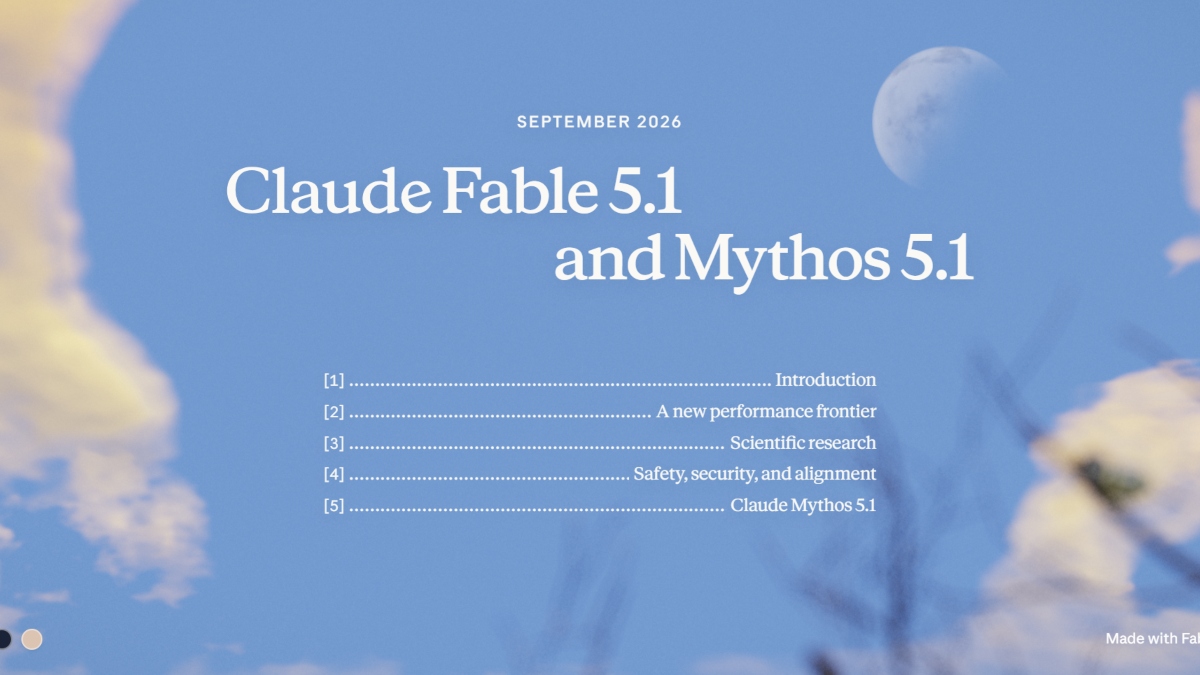
Anthropic released Claude Fable 5.1 on September 1, 2026, and if you're working with AI agents, this Claude model update deserves your attention. The new version delivers better performance than Fable 5 while cutting costs by roughly 25% on typical workloads and up to 45% for complex agentic coding tasks. That price reduction comes from cheaper cached data handling through prompt caching, not from trimming model quality. Fable 5.1 is available on all platforms, and it's already live on OpenRouter as a direct upgrade for existing Fable 5 users.
Performance Improvements in Claude Fable 5.1
Fable 5.1 picks up where Fable 5 left off, but the performance gap is noticeable. Anthropic's internal benchmarks show improvements across coding tasks, multi-step reasoning, and instruction following. The model handles longer context windows more effectively, which matters when you're feeding it entire codebases or lengthy API documentation.
Dan Shipper, CEO of Every, called it "the strongest coding model we've used, but now it's fast, token-efficient, and crucially actually speaks like a normal person." That last point matters more than you'd think. Developers spent the past year working around Fable 5's tendency to produce robotic-sounding output. Fable 5.1 addresses that without trading away precision.
Aaron Levie, CEO of Box, noted that an agent running on Fable 5.1 caught subtleties the previous model missed entirely. For agentic coding workflows where agents make autonomous decisions about your codebase, the gap between "close enough" and "actually correct" is the difference between a working pipeline and a broken one at 3 AM.
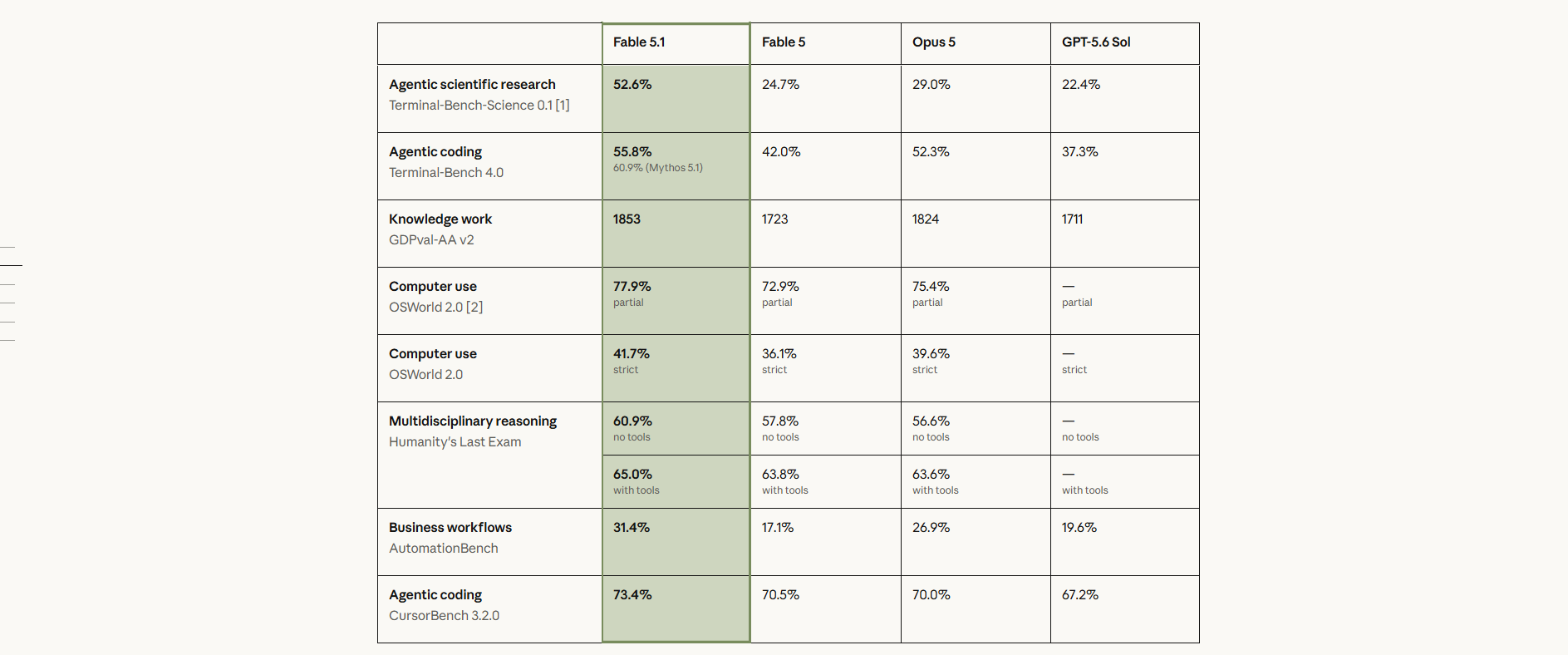
Image Credit: Anthropic
Pricing Changes and Prompt Caching
This is where the update gets interesting for anyone watching their API bill. Fable 5.1 costs about 25% less than Fable 5 on standard workloads. For complex agentic tasks, that jumps to 45% savings. The cost reduction comes from reduced pricing on cached data through prompt caching.
Prompt caching isn't new. What changed is that Anthropic made it significantly cheaper to use. When you send repeated requests with overlapping context, which is most agentic coding workflows, the cached portion of your prompt costs a fraction of the full rate. If your agent runs multiple iterations over the same codebase, you're paying substantially less per call.
For teams running agents in production, this changes the AI model pricing calculus on when to choose Fable 5.1 over cheaper but less capable models. Tasks that were borderline expensive on Fable 5 may now make clear economic sense on Fable 5.1. The savings compound at scale. A team running 10,000 agent calls per day with heavy context reuse could see meaningful monthly cost reductions.
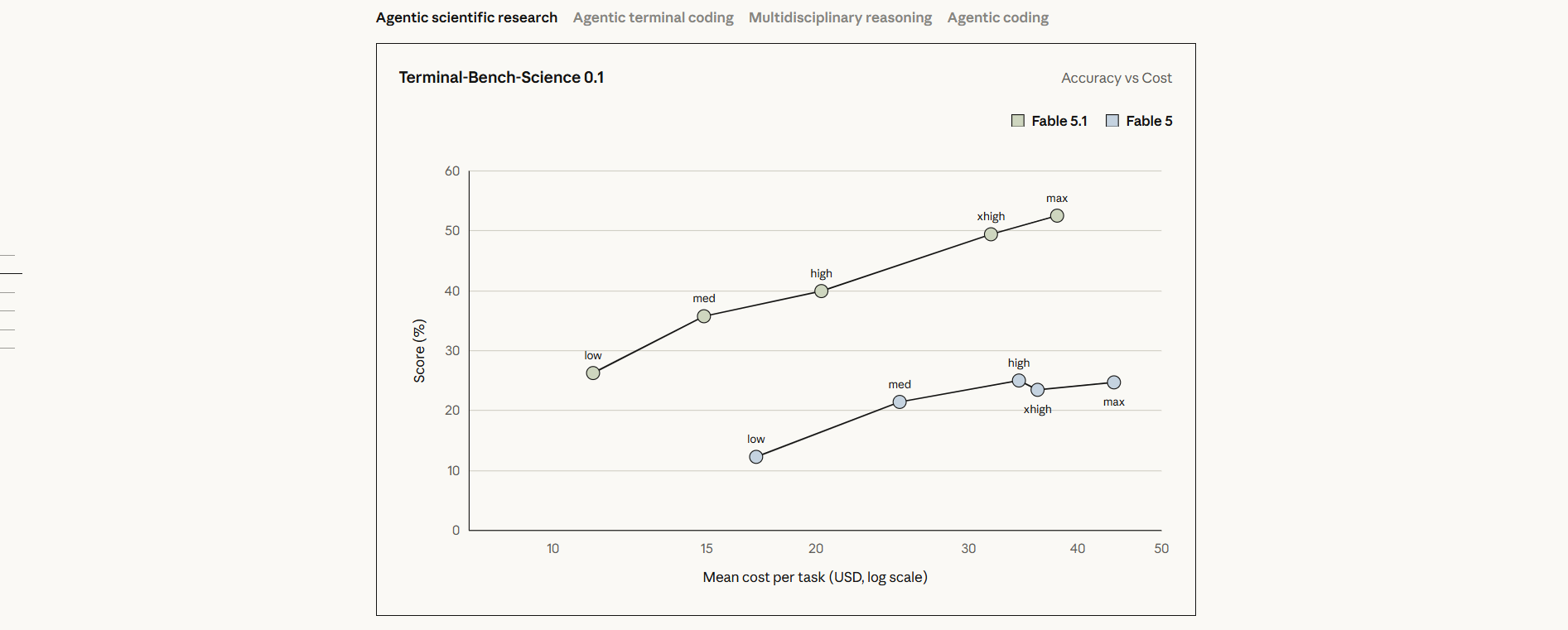
Image Credit: Anthropic
Refined Safeguards and Fewer False Refusals
Fable 5 had a problem with overblocking. Basic biology questions, chemistry queries, and legitimate research requests would sometimes trip safety filters and return refusals. Anthropic addressed this in Fable 5.1 with what they call "more precise safeguards."
The fix means fewer false positives. You can ask Fable 5.1 about basic biology without it refusing to answer. That sounds small, but if you've built tools that route user questions through Claude, you know how damaging a false refusal is to user trust. Each incorrect rejection is a support ticket waiting to happen.
Mythos 5.1, by contrast, keeps the same biology restrictions as its predecessor. Anthropic is drawing a clear line between their two model families. Fable 5.1 handles general-purpose work with more permissive safeguards. Mythos stays locked down for tighter-controlled environments.
Software Vulnerability Identification in Fable 5.1
Fable 5.1 can now identify software vulnerabilities, which opens up use cases in security auditing and code review pipelines. Developers can point the model at a codebase and get feedback on potential security issues without manually defining what to look for.
There are limits, and they're sensible ones. Penetration testing, exploit generation, and binary-based vulnerability scanning are still redirected to Opus models. Anthropic keeps the high-risk security work on their more controlled model line. But for standard code review where you want an extra pair of eyes on potential SQL injections, authentication flaws, or input validation gaps, Fable 5.1 handles it directly.
This matters for development teams that want security baked into their CI/CD pipeline without routing every scan through a more expensive model. It's a practical addition that fits how teams actually work.
Enterprise Frontier Safeguards From Anthropic
Anthropic also announced Enterprise Frontier Safeguards, rolling out later this fall. The key detail: data gets stored on the customer's own cloud servers, not on Anthropic's infrastructure.
For enterprises that have been hesitant to adopt AI models because of data residency requirements, this is the feature they've been waiting for. You get the model's capabilities without sending your proprietary code or data through a third party's storage system. Compliance teams can check their boxes. Legal teams can stop stalling deployments.
The specifics of implementation aren't fully public yet. Anthropic says more details will come with the broader rollout. But the direction is clear: Anthropic wants enterprise customers who can't move data off their own infrastructure.
Mythos 5.1 and Project Glasswing
Mythos 5.1 shipped alongside Fable 5.1 but with a different distribution model. While Fable 5.1 is available across all platforms, Mythos 5.1 is restricted to participants in Project Glasswing.
Early testing from Lisan al Gaib suggests Mythos 5.1 with low reasoning settings performs about the same as its predecessor running at Max reasoning. That means you can get similar quality output at lower compute cost, at least within the Glasswing program. Whether that translates to a broader release depends on how the program develops.
For now, most developers should focus on Fable 5.1. It's the model you can actually access and build on today.
Fable 5.1 on OpenRouter and Developer Impressions
Fable 5.1 is live on OpenRouter as a direct upgrade for existing Fable 5 workloads. If you're already routing through OpenRouter, switching is as simple as updating your model identifier. The API contract stays the same, so existing integrations keep working without code changes.
The early impression from developers is positive across the board. The combination of better performance, lower cost, and more natural output makes Fable 5.1 a meaningful step forward rather than an incremental tweak. For agentic coding specifically, the token efficiency gains mean agents can do more work per dollar, and the improved instruction following means fewer retries when an agent misinterprets a task.
One thing to watch: the cost savings from prompt caching depend heavily on your workload pattern. If your requests have low context overlap, you'll see smaller savings. Teams with high context reuse, like those running agents over the same codebase repeatedly, will see the biggest cuts.
- How to Download Fiverr - Freelance Service APK Latest Version 4.5.1.1 for Android 2026
- How to Download Kucing Real Estate APK Latest Version 3.0.4 for Android 2026
- How to Download Building Mods for Minecraft APK Latest Version 22.8 for Android 2026
- How to Download Fiverr - Freelance Service APK Latest Version 4.5.1.1 for Android 2026
- How to Download Kucing Real Estate APK Latest Version 3.0.4 for Android 2026
- How to Download Building Mods for Minecraft APK Latest Version 22.8 for Android 2026
What the Claude Model Update Means for Developers
The Fable 5.1 release hits three things developers care about at once. It's faster on complex tasks. It's cheaper to run. And it blocks fewer legitimate requests. If you're building agentic coding tools, this is the first model update where switching feels like an obvious win rather than a calculated tradeoff.
The AI model pricing change alone makes the switch worthwhile for most teams. The performance gains and refined safeguards are the bonus that pushes it from "worth considering" to "do this now." The Enterprise Frontier Safeguards announcement, while not yet fully available, signals that Anthropic is serious about removing the last barriers to enterprise adoption.
If you haven't tried Claude Fable 5.1 yet, you can download the Claude app on your device or access the API through Anthropic's Claude platform, OpenRouter, or any provider that has already integrated the new model. The migration from Fable 5 is straightforward since the API interface hasn't changed. Update your model identifier, test your existing prompts, and you should see immediate cost savings on cached workloads. For developers building agentic coding pipelines, this is the upgrade you've been waiting for.
 NEWS
NEWS REVIEWS
 HOWTO
HOWTO