

Gemini 3.8 Flash 2026: Google's AI Workhorse and Cyber Model

2026-09-04
Google's latest Gemini 3.8 Flash model improves reasoning and coding. A new Cyber variant targets security research. Both at the same low price.
Google released Gemini 3.8 Flash on September 2, 2026, and it's the third Flash model in six weeks. That pace tells you something. Google is pushing hard on the mid-tier AI model space, where most developers and users actually live. The Gemini 3.8 Flash update brings two variants this time: the standard Flash for general-purpose work, and a new Gemini Flash Cyber built specifically for security research. So what does that mean if you use AI tools for development, analysis, or anything that touches code? It means the model you reach for daily just got meaningfully better at the things that mattered least to its predecessor.
What Gemini 3.8 Flash Does Better Than 3.7 Flash
The pitch is simple. Google calls 3.8 Flash its "most intelligent workhorse model." That's marketing language, but the improvements over 3.7 Flash are real. The model "works harder" in a literal sense: it runs more reasoning steps before settling on an answer, and it calls tools iteratively instead of giving up after one attempt when the first result doesn't solve the problem. If you've used AI models that quit too early on complex prompts, this is Google's answer to that frustration.
The areas where 3.8 Flash pulls ahead are software engineering, agentic tasks, and multi-step reasoning. That's not a random list. These are the exact categories where developers hit walls with previous Flash models. You ask for a multi-file refactor, and the model loses track halfway through. You set up an agent workflow, and it stalls after two tool calls. The 3.8 Flash update targets those failure points directly, which is why the benchmark improvements matter more than the raw numbers suggest.
HLE-Verified, a benchmark covering multi-step reasoning across STEM fields, humanities, and professional domains, puts Gemini 3.8 Flash at 54.9%. That's a solid number for a mid-tier model. The benchmark tests whether a model can chain reasoning steps together rather than pattern-match its way to an answer.
For agentic tasks, the results get more concrete. On Vals Finance Agent V2, the new Flash outperforms 3.7 Flash and other frontier models. Same story on Harvey's Legal Agent Benchmark. These are domain-specific agent benchmarks, not general knowledge tests. The improvement translates to actual work scenarios.
DeepSWE v1.1 is where things get interesting. This benchmark tests autonomous software engineering, and 3.8 Flash outperforms most larger frontier models. A smaller, cheaper model beating bigger ones on engineering tasks is the kind of result that makes developers reconsider their tool choices.
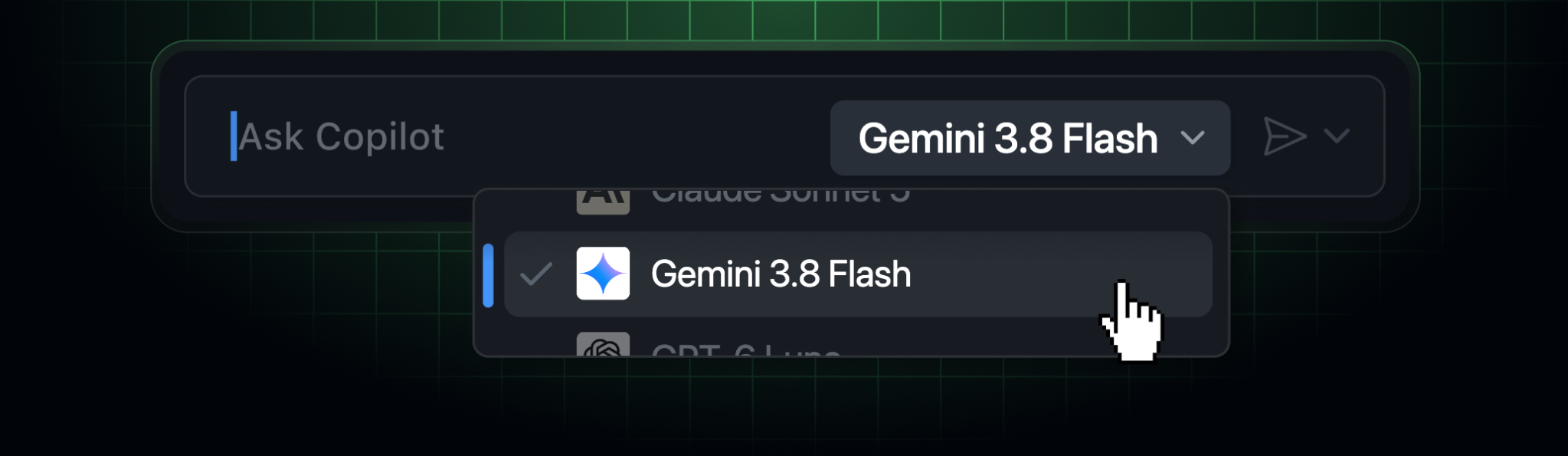
Gemini 3.8 Flash Benchmarks: Numbers That Matter
Benchmarks can be misleading, especially when vendors cherry-pick the ones that flatter their models. But some numbers tell you something real about what a model can actually do. Let's look at what Google is showing for this Google AI model update.
The HLE-Verified score of 54.9% is the headline number for the standard Flash variant. It measures multi-step reasoning across a broad set of academic and professional fields. The DeepSWE v1.1 results show the model handling autonomous engineering tasks better than models twice its size. On the agent side, Vals Finance Agent V2 and Harvey's Legal Agent Benchmark both show 3.8 Flash beating 3.7 Flash and competing frontier models.
For Gemini Flash Cyber, the benchmark picture is specific to security work. CyberGym scores show it surpassing 3.5 Flash Cyber and larger frontier models. On an internal benchmark covering 20 programming languages, the Cyber variant hits a 70%+ success rate in vulnerability detection and patching.
The CWE-Bench (Collinear) results are where cost-effectiveness becomes clear. Gemini Flash Cyber achieves a pass@1 of 47.2%. The leading frontier model sits at 47.8%. That's a 0.6 percentage point gap. The Cyber variant costs significantly less. If you're running security analysis at scale, that price-to-performance ratio matters.
Chrome Security testing shows the Cyber model producing 2.6x more correct patches than the best commercial models available today. On the Wiz penetration testing benchmark, it delivers 7.5 to 9.7% higher recall at 2.3 to 5.2x lower cost than competitors, which adds up fast when you're running continuous security assessments across a large codebase.
Google's own Cloud Vulnerability Research team used the model to find a critical foundational vulnerability in under two hours. That kind of discovery usually takes months. That alone tells you the model is doing something previous AI tools simply couldn't do, regardless of how much you were willing to pay for them.
Gemini Flash Cyber: Security AI Gets Serious
The Gemini Flash Cyber variant deserves its own conversation. This is Google's most capable cybersecurity model, and the company is taking a different approach to how it's distributed.
Instead of open access, Gemini Flash Cyber is available through the Fairwind Program. That program is limited to trusted defenders. You can't just sign up and start using it. Google has put CBRN safeguards and cyber offense mitigations in place. The Cyber variant carries more permissive mitigations tailored for legitimate security work, which makes sense. You can't do vulnerability research if your model refuses to engage with security-related content.
The use cases are specific. Vulnerability detection across major programming languages. Automated patch generation that actually compiles and works. Penetration testing support that goes deeper than basic scanning. If you work in security research or defensive cybersecurity, this is the model built for your workflow.
Prompt injection robustness has also improved, measured by Gray Swan testing. Given that prompt injection is one of the biggest practical threats in AI-assisted security work, that improvement is worth paying attention to. A security model that's vulnerable to prompt injection defeats the purpose.
Gemini 3.8 Flash Pricing and Where to Get It
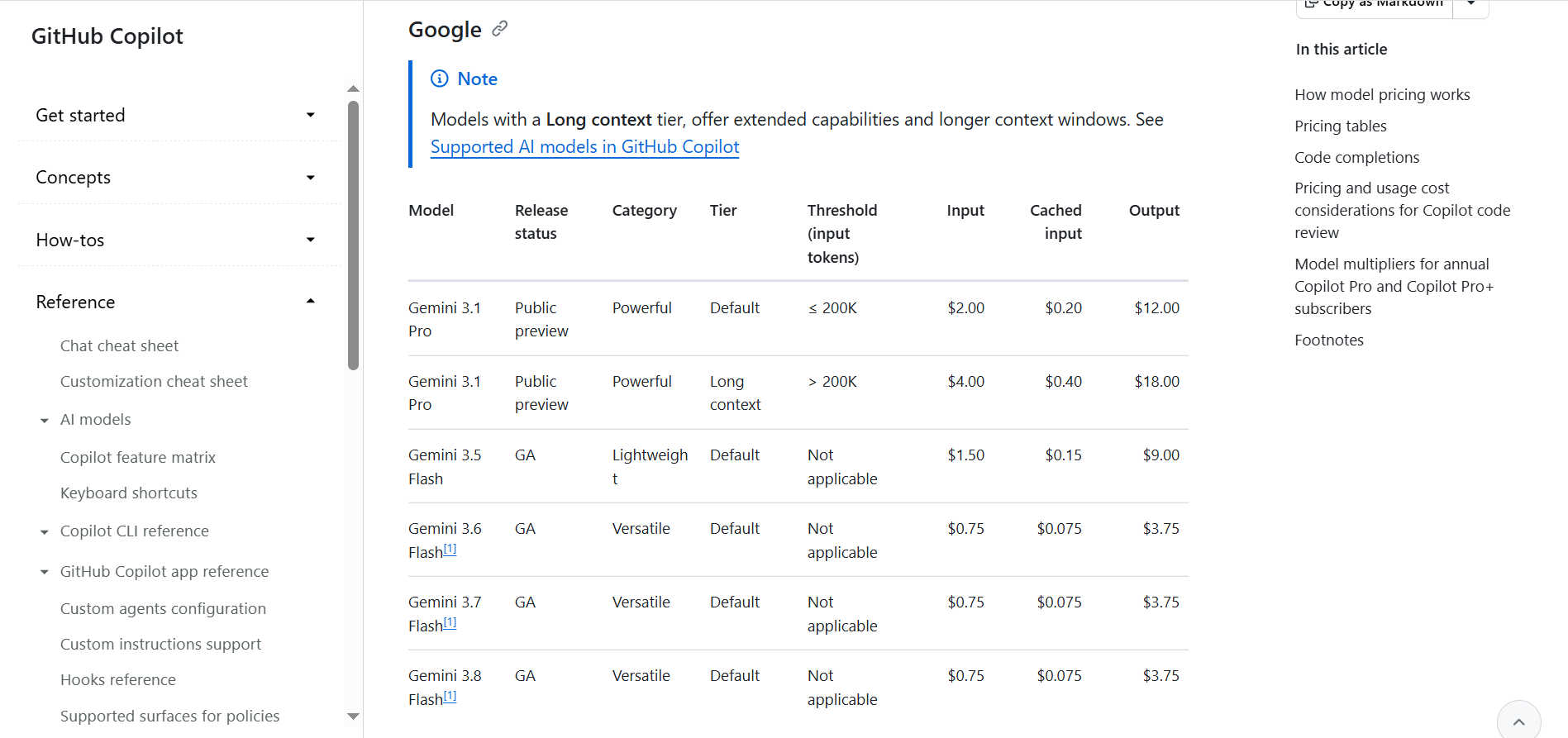
Here's where things get practical. Gemini 3.8 Flash keeps the same introductory pricing as 3.7 Flash: $0.75 per million input tokens and $3.75 per million output tokens. No price hike despite the capability jump. That matters if you're running API calls at volume, and most serious developers are.
The standard Flash variant is available across Google AI Studio, Android Studio, Gemini API, Google Antigravity, and Stitch. For consumers, it's available to Google AI Pro and Ultra subscribers through the Gemini app, AI Mode in Google Search, and Google Sheets. If you're already paying for a Pro or Ultra subscription, you have access to 3.8 Flash right now. No extra steps.
Gemini Flash Cyber is a different story. You need access through the Fairwind Program, and Google is selective about who gets in. That's by design. A model this capable at security work needs guardrails on who can use it.
How to Access Gemini 3.8 Flash on Your Phone
For most users, the way to try Gemini 3.8 Flash is through the Gemini app on Android. If you have a Google AI Pro or Ultra subscription, the model is already available in the app. No separate install. No developer setup required.
Open the Gemini app, start a conversation, and you're using the latest Flash model. The improvements in multi-step reasoning and agentic tasks translate directly to better responses on your phone. If you've tried asking Gemini to help with coding questions or complex analysis before and found it lacking, the 3.8 Flash update is the version to test against. Ask it something that requires three or four steps of reasoning. That's where the difference shows up.
For developers, Android Studio integration means you can work with the model directly in your development environment. The Gemini API and Google AI Studio are the other primary access points if you're building applications on top of the model. Stitch and Google Antigravity round out the platform coverage.
What This Google AI Model Update Means Going Forward
Three Flash releases in six weeks. That's not a normal release cadence. Google is treating the Flash tier as its primary competitive product, the one that most developers and users will actually touch day to day.
The Gemini model 2026 roadmap looks clear. Keep pushing capability at the mid-tier price point while building specialized variants for high-value verticals like cybersecurity. The standard Flash handles general intelligence and coding. The Cyber variant handles security work that previously required expensive frontier models. The strategy is to cover both the broad market and the specialized niches from the same model family.
- If you're a developer, the practical takeaway is that the gap between Flash and Pro models keeps shrinking on the dimensions that matter for real work. Multi-step reasoning, agentic tasks, and software engineering are exactly where 3.8 Flash shines. The fact that it costs the same as 3.7 Flash makes the upgrade decision straightforward.
- If you're in security research, the Cyber variant changes the economics of AI-assisted vulnerability research. Finding critical bugs in under two hours instead of months is a real shift in what's possible. The model costs less than competitors. More importantly, it's doing things that previous models at any price couldn't do.
Google Gemini is a productivity and creativity app that supports live conversations and multimodal creation.
- How to Download ONE PIECE TREASURE CRUISE-RPG APK Latest Version 16.1.6 for Android 2026
- How to Download The Weather Channel - Radar APK Latest Version 16.24.1 for Android 2026
- How to Download Lyft APK Latest Version for Android 2026
For everyday users on the Gemini app, the update means better answers to complex questions. The kind of multi-step prompts that used to confuse earlier Flash models - the ones where you'd get a response that started strong and then lost the thread halfway through - those are the prompts where 3.8 Flash should perform noticeably better.
Download Gemini app from APKPure to try the latest model on your Android device. If you're already a Google AI Pro or Ultra subscriber, 3.8 Flash is live right now. Start with a prompt that requires multi-step reasoning and see the difference for yourself.
 NEWS
NEWS REVIEWS
 HOWTO
HOWTO