


OpenAI Jalapeno AI Chip Benchmark Results Explained

2026-08-26
OpenAI published first benchmark results for its custom AI inference chip Jalapeno, showing major gains over Nvidia hardware in throughput and latency.
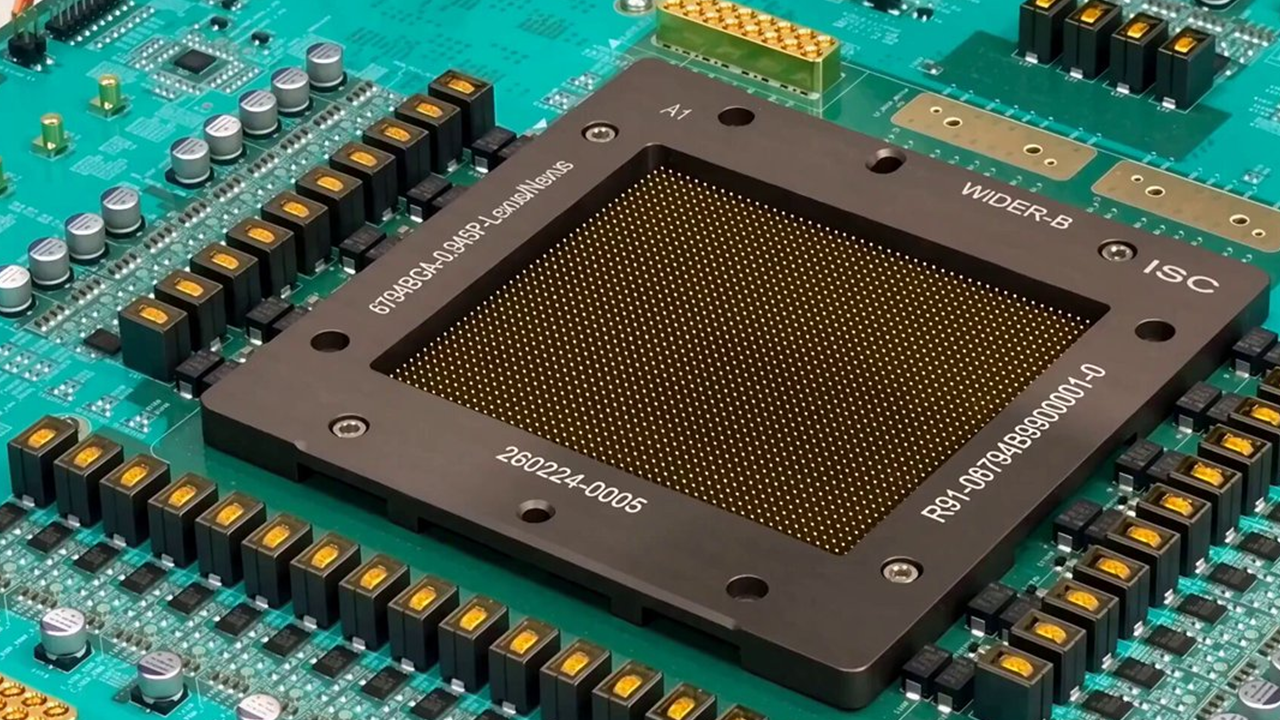
OpenAI published the first benchmark results for its custom AI inference chip, Jalapeno, on August 25, 2026. The numbers are big enough that anyone using ChatGPT on a phone should care. The chip delivers faster responses, handles more concurrent users per watt, and processes large language models more efficiently than the Nvidia hardware OpenAI currently relies on. If you use ChatGPT or any app built on OpenAI models, the Jalapeno chip matters because it directly affects how fast and how reliably those apps respond.
What the OpenAI Jalapeno Chip Actually Is
Jalapeno is an Application-Specific Integrated Circuit, or ASIC, built in partnership with Broadcom. OpenAI first introduced it in June 2026 as its first custom silicon designed specifically for AI inference. Unlike general-purpose GPUs that handle training and inference, Jalapeno focuses on one job: running trained models to serve user requests. That specialization matters. When you design a chip for a single purpose, you can strip out everything that doesn't serve that purpose and pour resources into the parts that do.
The chip runs at 700 watts nominal, but its sustained power during testing stayed at or below 550 watts. OpenAI's hardware team built it from the ground up to minimize data movement between processing units, which is one of the biggest sources of latency in AI inference. Model state, including the KV cache used while generating responses, stays local instead of bouncing between chips. That architectural decision is why Jalapeno can deliver both higher throughput and lower latency at the same time, where competing systems usually force a tradeoff between the two.
Jalapeno Benchmark Results Against Nvidia Hardware
OpenAI tested Jalapeno on InferenceX, a public benchmarking platform from SemiAnalysis that measures the full process of serving an AI request. The comparison systems were Nvidia GB200 and GB300 superchips, which represent the best commercially available hardware at the time of testing.
The results span three open-weight models: GPT-OSS 120B, DeepSeek R1 670B, and Kimi K2.5 1T. Here's what the numbers show:
- 1.5 to 1.9x more AI work per watt at peak throughput across all three models
- 1.7 to 3.6x lower end-to-end latency across all three models
- 2.1 to 4.1x higher performance on highly interactive workloads
- On Kimi K2.5 1T, the largest model tested, Jalapeno delivered 3.4x lower latency specifically
The comparison used each accelerator's published chip power rating. Jalapeno is rated at 700 watts versus GB200's 1,200 watts and GB300's 1,400 watts. So Jalapeno achieves these gains while drawing significantly less power than the Nvidia alternatives.
| Model | Peak Throughput/Watt Gain | Latency Reduction |
|---|---|---|
| GPT-OSS 120B | 1.9x higher | 1.7x lower |
| DeepSeek R1 670B | 1.7x higher | 3.6x lower |
| Kimi K2.5 1T | 1.5x higher | 3.4x lower |
For GPT-OSS 120B specifically, Jalapeno delivered 85,448 mixed tokens per second per kilowatt versus GB200's 44,960. On DeepSeek R1, it managed 19,641 versus 11,781. These aren't marginal improvements. They represent a meaningful shift in how efficiently AI inference can be done.
How Jalapeno Handles AI Inference Differently
Language model inference has distinct phases. Prefill, when the system processes the prompt, is compute-heavy. Decode, when the system generates the response token by token, is constrained by memory bandwidth. A chip that excels at prefill can stall during decode while waiting for data to move between cores.
Jalapeno's architecture addresses this by keeping model state local and activating the right combination of compute, memory, and networking for each phase. The chip uses a large domain that lets the entire workload stay within one connected system. That reduces communication delays, which is where general-purpose GPUs lose time. The result is a balanced accelerator that handles both prefill and decode well, and adapts as the balance between them shifts. That adaptability is what makes it particularly suited for agentic workloads, where tasks run in multiple steps and delays compound.
What This Means for ChatGPT Users on Mobile
If you use the ChatGPT app on Android, you won't directly interact with Jalapeno hardware. The chip sits in OpenAI's data centers, not on your phone. But the performance gains translate to user-facing improvements in three concrete ways.
First, faster end-to-end latency means responses start sooner. On the largest models tested, latency dropped by more than 3x. For interactive agents that need to complete multiple steps in sequence, those savings compound. A task that takes five sequential inference calls would see the total delay reduced proportionally.
Second, higher throughput per watt means OpenAI can serve more concurrent users from the same power budget. During peak usage hours, that means fewer rate limits, fewer queue delays, and more reliable access. If you've ever hit a "ChatGPT is at capacity" message, better hardware efficiency directly addresses that problem.
Third, the cost per inference drops. OpenAI explicitly said that Jalapeno can improve operating margins by letting useful work and revenue grow faster than the cost to serve. Lower costs make it easier to offer capable models at lower subscription tiers or for free. The ChatGPT AI chip gains ultimately flow to users through better availability and faster response times.

Deployment Timeline and Nvidia Partnership
OpenAI plans to deploy Jalapeno in small volumes by the end of 2026, with a production ramp through 2027. The company hasn't disclosed specific deployment numbers. This is a first-generation chip, and OpenAI is already developing Gen 2 and Gen 3 successors.
But Jalapeno won't replace Nvidia hardware entirely. Richard Ho, OpenAI's hardware vice president, said during a press briefing that the company's overall compute strategy includes "very good partners" and that OpenAI doesn't expect to replace its entire chip lineup with Jalapeno. OpenAI will continue deploying Nvidia accelerators for both training and inference workloads alongside its custom silicon.
That dual-track approach makes sense. Nvidia's GPUs are general-purpose and can handle new model architectures quickly. Jalapeno is tuned for the specific workloads OpenAI runs today, but adapting it to new model families still requires new kernels and model-specific work. The flexibility of Nvidia hardware fills gaps that specialized silicon can't cover yet.
AI Used to Design and Program the Chip
One of the more striking details from the OpenAI blog post is that AI itself played a direct role in Jalapeno's development. The team went from initial design to tapeout in nine months, using earlier OpenAI models to explore implementations and shorten design loops. AI also helped improve the chip's arithmetic circuits, letting the team fit more compute performance into the available space.
On the programming side, engineers used Codex with GPT-Astra to bring three open-weight models to high performance on Jalapeno within two months, including models not part of the original production plan. For selected GPT-OSS attention and mixture-of-experts blocks, AI-generated implementations ran 1.5 to 1.8x faster than the human-expert-written versions. Those gains apply to specific blocks rather than the full model, but they point to a development loop where each generation of chips is improved by the models running on the previous generation.
Why the OpenAI Chip Matters for AI Apps
The Jalapeno benchmark results matter beyond raw performance numbers. They show that a company building AI models can also build hardware that serves those models more efficiently than the best general-purpose alternatives. That vertical integration, from model design down to silicon, is what lets OpenAI tune every layer of the stack together.
For the broader AI app space, better inference hardware means developers can build more complex agentic applications without hitting latency walls. If you're building on the ChatGPT API or using OpenAI models inside your Android app, faster and cheaper inference gives you more room to create experiences that feel responsive on mobile. The gap between a model running in a data center and an app feeling instant on a phone gets smaller.
The competitive pressure also pushes Nvidia and other hardware providers to improve faster. More efficient alternatives mean pricing power shifts toward buyers, which includes cloud providers and ultimately app developers and end users. If you use AI-powered apps on Android, the hardware race between OpenAI's custom silicon and Nvidia's GPUs directly affects the quality of your experience.
The bottom line: Jalapeno is a hardware story that matters beyond data center engineers. It's the infrastructure layer that determines how fast your AI apps respond and how much they cost to run. OpenAI's first benchmark results suggest the company is serious about building that layer itself, not just buying it from someone else.
To experience the AI-powered features that benefit from these infrastructure improvements, download the ChatGPT app from APKPure. The app gives you direct access to OpenAI's models on your Android device, and as Jalapeno hardware comes online, you'll notice faster responses and better availability without needing to update anything on your end.
Safety and privacy note: benchmark results are based on OpenAI's internal testing and public InferenceX data. Real-world performance on mobile devices depends on your network connection, device hardware, and current server load. The ChatGPT app on APKPure is the official OpenAI client, and your conversations are handled under OpenAI's privacy policy. The deployment timeline is subject to change as production qualification and software maturation continue.
 NEWS
NEWS REVIEWS
 HOWTO
HOWTO