

What Is GPT-5.6? OpenAI's New AI Models Explained

2026-07-10
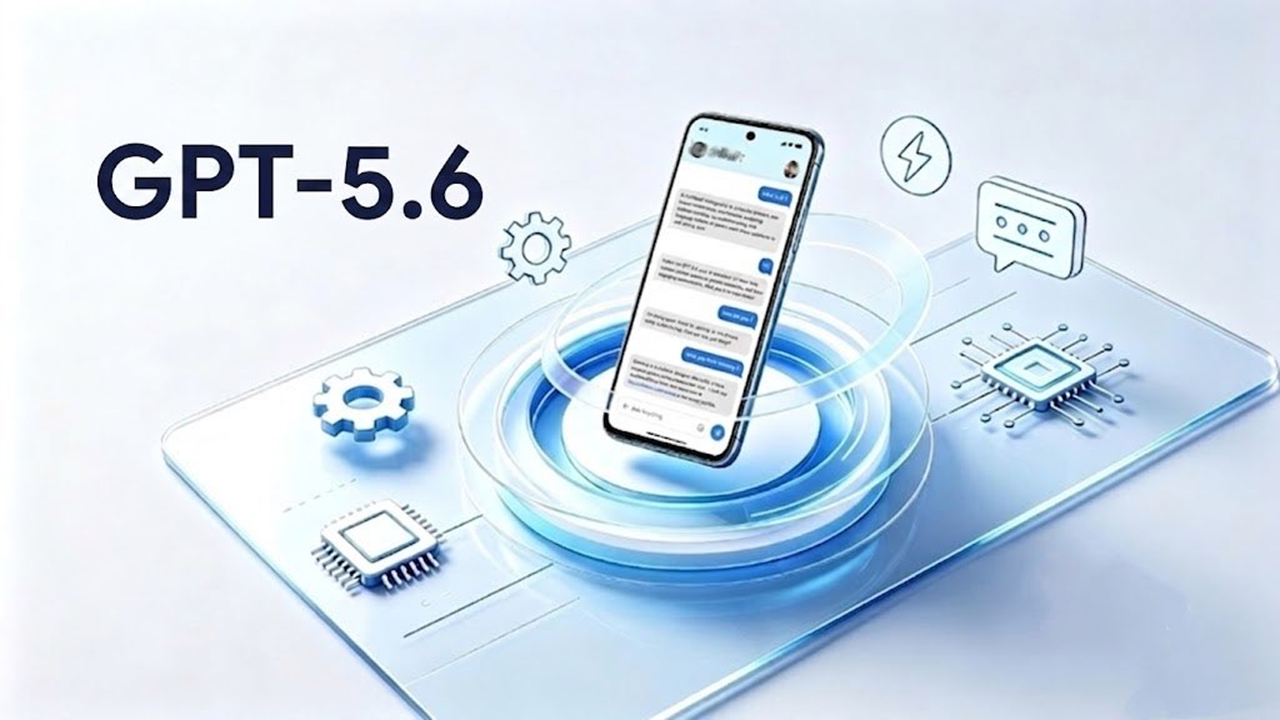
OpenAI's GPT-5.6 is here. This guide covers the three-tier model system, Codex integration, ChatGPT Work, and everything changed in the July 2026 ChatGPT update for mobile and desktop.
GPT-5.6 is OpenAI's latest family of AI models, released globally on July 9, 2026 after a two-week government review. It comes in three tiers named after celestial bodies: Sol (the flagship), Terra (the balanced workhorse), and Luna (the lightweight, low-cost option). Together they replace the older GPT-5.5 lineup and bring a new naming system, lower prices, and a set of features that change how the ChatGPT app works on every platform from Android to desktop.
If you're trying to understand what GPT-5.6 actually does, how the three models differ, and what changed in the ChatGPT new model 2026 update, this guide covers the full picture.
What GPT-5.6 Actually Is
GPT-5.6 is a family of large language models built by OpenAI. The "5.6" number marks the generation. The names Sol, Terra, and Luna mark persistent capability tiers that will carry forward to future versions. So when GPT-6 eventually arrives, you'll still see Sol, Terra, and Luna versions, each improving at its own pace.
OpenAI introduced this naming system specifically to stop the confusion of older labels like "Pro," "Mini," and "Standard" that changed meaning with every release. Sol is Latin for "sun," Terra for "earth," Luna for "moon." The astronomy theme is just a naming convention. What matters is the capability split: Sol handles the hardest tasks, Terra covers everyday work, and Luna handles high-volume, simple tasks at the lowest cost.
All three models share the same underlying architecture and support text, image, audio, and video input. They'reavailable through the ChatGPT app, the Codex coding tool (now merged into ChatGPT), and the OpenAI API.
GPT-5.6 Sol: The Flagship Model
GPT-5.6 Sol is the most capable model in the lineup. It's designed for complex reasoning, software development, scientific research, and long-running agent tasks that need to chain together dozens of steps without losing track.
Sol introduces two new modes that go beyond standard inference. Max reasoning effort gives the model more time to think through hard problems, which helps with multi-step math proofs, legal analysis, and complex code generation. Ultra mode goes further: it spins up four parallel AI agents that work on different parts of a task at the same time, then combine their results. Think of it as the difference between asking one smart person to solve a problem slowly versus giving that person a small team.
The numbers back this up. On Terminal-Bench 2.1, a benchmark that tests command-line coding workflows, Sol Ultra scored 91.9%. The standard Sol mode scored 88.8%. For comparison, Anthropic's Claude Mythos 5 scored 88.0% on the same test. On the Artificial Analysis Coding Agent Index, Sol with max reasoning hit 80, beating Claude Fable 5 by 2.8 points while using less than half the output tokens.
Sol also has a 1.5 million token context window. That's roughly equivalent to 10,000 lines of code or a thick novel. It means you can feed the model an entire codebase or a long legal document in a single conversation without splitting it into chunks.
GPT-5.6 Terra and Luna: The Other Two Tiers
Terra sits in the middle. OpenAI says its performance matches GPT-5.5, the previous standard model, but at half the price. That makes it the practical choice for everyday tasks like content drafting, data analysis, document review, and general-purpose coding work.
Luna is the smallest and cheapest model. It's built for speed and volume. If you need to process thousands of customer support tickets, generate summaries for a batch of articles, or classify data at scale, Luna handles those jobs without costing much. It's not meant for complex reasoning, but it doesn't need to be.
In the GPT-5.6 vs GPT-5.5 comparison, Terra matches the old model's capability while cutting cost by 50%, and Luna costs roughly one-fifth of what GPT-5.5 did. Sol costs the same as GPT-5.5 standard but outperforms it significantly across every benchmark OpenAI published.
GPT-5.6 Pricing Breakdown
Understanding GPT-5.6 pricing matters for API developers and ChatGPT app subscribers alike. OpenAI prices all three models per million tokens, which are the basic units of text the models process. Here's what each tier costs:
| Model | Input (per 1M tokens) | Output (per 1M tokens) |
|---|---|---|
| GPT-5.6 Sol | $5 | $30 |
| GPT-5.6 Terra | $2.50 | $15 |
| GPT-5.6 Luna | $1 | $6 |
To put that in perspective, Anthropic's Claude Fable 5 costs $10 per million input tokens and $50 per million output tokens. Sol matches or beats Fable 5 on most benchmarks at half the price. Terra and Luna? They cost roughly one-sixteenth as much as Fable 5 while still scoring above it on several tests, according to OpenAI's published benchmarks.
For the ChatGPT app Android users and others on mobile platforms, the models are available through subscription tiers (Free, Plus, Pro) rather than per-token billing. The model picker in the app lets you choose between speed and reasoning depth, and the underlying model maps to Sol, Terra, or Luna depending on what you select.
GPT-5.6 Features: What's New
Several GPT-5.6 features go beyond just "better answers." The biggest changes affect how the models handle complex work.
Multi-agent orchestration. Sol's Ultra mode coordinates up to four sub-agents that work in parallel on different parts of a task. This is the first time OpenAI has shipped multi-agent parallelism as a built-in model feature. On Terminal-Bench 2.1, the Ultra mode pushed Sol's score from 88.8% to 91.9%.
Programmatic tool calling. The API now supports native tool orchestration, meaning developers can define tools and let the model decide when and how to call them without manual prompting. This is a big deal for building AI agents that need to interact with databases, APIs, and external services.
Cache breakpoints. Developers can set cache points in long conversations. The model skips reprocessing everything before the cache. OpenAI says this can cut costs by more than 50% for applications with long, repeated system prompts.
Frontend code generation. Sol can render web pages, check them for visual and functional issues, and fix problems before returning the final result. OpenAI demonstrated this with a notes app generated from a simple prompt. It had clean layout, consistent spacing, and proper color hierarchy.
54% token reduction in coding tasks. Sam Altman told CNBC that GPT-5.6 uses 54% fewer tokens to complete coding tasks compared to the previous generation. For developers paying per token, that's a direct cost cut on top of the already lower per-token price.
Codex Merged Into ChatGPT
One of the biggest changes in OpenAI July 2026 is that Codex, OpenAI's coding tool, is no longer a separate app. It's been integrated directly into ChatGPT across web, mobile, and desktop.
If you previously used the standalone Codex app, updating to the latest version of ChatGPT replaces it. Your projects, repositories, and settings carry over. The unified app now has three main modes: Chat for conversation, Work for research and document creation, and Codex for software development.
This consolidation makes sense from a product perspective. Codex had grown to 5 million weekly active users since January 2026, and non-developers were adopting it three times faster than developers. Merging it into ChatGPT means one app instead of two, with shared context across coding, research, and conversation.
The new ChatGPT desktop app for macOS and Windows combines all three modes. It includes a built-in browser, local file access, and support for multiple repositories in a single Codex project.
Atlas Browser Shutdown: What Happened
OpenAI also announced that ChatGPT Atlas, the AI browser it launched in October 2025, will shut down on August 9, 2026. Atlas ran for less than a year.
The Atlas features aren't disappearing. They're being redistributed across three surfaces:
1. ChatGPT desktop app now has a built-in browser with tab support, password manager integration, and autofill. You can browse the web, log into accounts, and download files without leaving the app.
2. Chrome extension brings ChatGPT into your regular browser. You can ask questions about the current page, summarize content, or start longer tasks without switching tabs.
3. Cloud browser runs on OpenAI's servers and lets AI agents interact with websites on your behalf. This is what powers the agent tasks in ChatGPT Work.
OpenAI's app chief Fidji Simo had previously told teams to cut side projects. The Sora video tool was shut down earlier this year under the same directive. Building a standalone browser was a distraction. Chrome already dominates the desktop browser market with over 70% share.
ChatGPT Work: The New Agent Mode
ChatGPT Work launched alongside GPT-5.6 as a native agent for longer, more involved tasks. Unlike a regular chat where you ask one question and get one answer, Work can research across connected apps, analyze information, and produce finished deliverables like documents, spreadsheets, presentations, and reports.
You can follow its progress as it works, answer questions it asks, change direction mid-task, and approve important actions before it executes them. Work can also schedule recurring tasks that run on a trigger or monitor for changes.
On mobile and web, Work is rolling out to paid plans. Pro, Pro Lite, Enterprise, and Edu users get access first, with Plus and Business following over the coming days. Enterprise and Edu workspaces get a two-week preview period with an opt-out before it turns on automatically.
ChatGPT App on Android: What Changed
The ChatGPT app on Android received several updates with the GPT-5.6 release. The model picker now shows speed and reasoning options that map to the three new models. Android users on paid plans can long-press the send button to choose a specific model for a single message without changing their default.
The app also gained better photo uploads, conversation sharing, and pinning features. If you haven't updated recently, the latest version on APKPure includes all these changes.

Privacy and Government Review
GPT-5.6's release path was unusual. OpenAI first announced the models on June 26, 2026, but the US government asked the company to limit access to about 20 vetted partners while officials reviewed the models' cybersecurity capabilities. This was the first time the US government required a pre-release review of an AI model.
Why did the US government get involved? Sol's performance in security-related benchmarks raised flags. On ExploitBench, Sol matched Anthropic's Claude Mythos Preview while using only about one-third of the output tokens. On ExploitGym, a benchmark created by UC Berkeley researchers, all three GPT-5.6 models showed notable cybersecurity capability growth as reasoning intensity increased.
OpenAI emphasized that Sol is better at helping defenders find and fix vulnerabilities than at executing end-to-end attacks. The company also pointed out that the model didn't cross any of OpenAI's own safety thresholds for autonomous cyber operations.
After two weeks of additional testing, the US Department of Commerce's AI Standards and Innovation office approved full public release on July 8. OpenAI's CEO Sam Altman publicly stated that the government review process "shouldn't become the long-term default," but said the company cooperated to get the models to users as quickly as possible.
Is GPT-5.6 Safe to Use?
OpenAI says GPT-5.6 has the most complete safety system the company has shipped. The models use layered defenses: built-in refusals at the model level, real-time content classifiers during generation, account-level risk reviews, differentiated access controls, and monitoring systems.
For high-risk situations, the system can pause generation and route the content to a larger reasoning model for review. If the review flags a violation, the content gets blocked before it reaches the user.
OpenAI ran over 700,000 GPU-hours of automated safety testing. External red-team evaluations happened before release too.
No safety system catches everything. GPT-5.6 can still produce incorrect information, and the larger context window means it can generate longer responses that are harder to fact-check. If you're using it for important work, treat its output the same way you'd treat a very fast but occasionally wrong research assistant.
OpenAI July 2026: The Bigger Picture
The GPT-5.6 launch wasn't just a model upgrade. It was a coordinated reset of OpenAI's entire product line. Three models with a clear naming system. Codex folded into ChatGPT. Atlas shut down. ChatGPT Work added as a native agent. The desktop app rebuilt to combine chat, coding, and browsing.
For people who just use ChatGPT on their phone, the practical change is simpler: better answers, faster responses, and a model picker that makes sense. If you're a developer, the pricing drop and token efficiency gains are the headline. And if you're watching the AI industry, the government review process sets a precedent that will likely apply to every major model release from now on.
- How to Download Dayforce APK Latest Version 2026.10.2 for Android 2026
- How to Download Google Photos APK Latest Version for Android 2026
- How to Download Flipboard:Your Social Magazine APK Latest Version 4.3.64 for Android 2026
 NEWS
NEWS REVIEWS
 HOWTO
HOWTO