

Pingo AI Language List: All 25+ Languages Available

2026-08-05
Complete list of all 25+ languages you can learn with Pingo AI, covering voice quality by language, scenario depth, and best-supported languages.
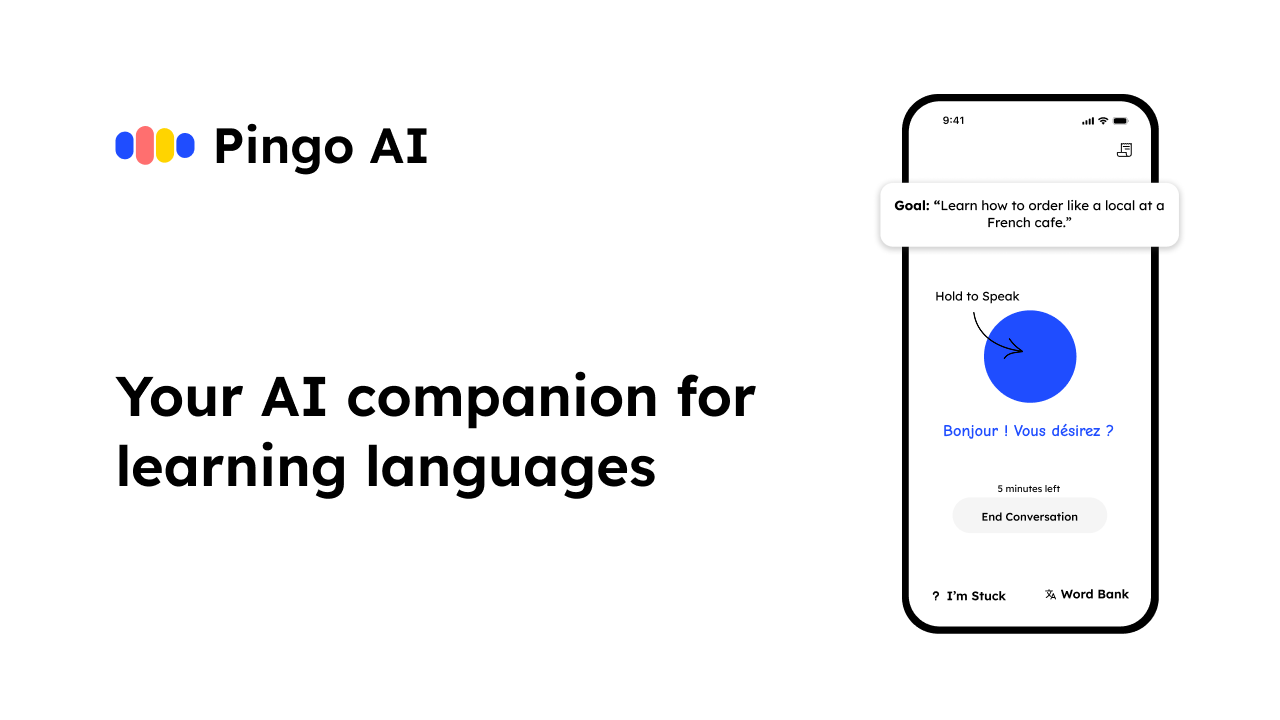

Language Learning: Pingo AI is a speaking tutor app that builds real-world fluency through voice conversations.
Pingo AI supports over 25 languages for conversation practice. That puts it in the upper tier of language learning apps for coverage, ahead of competitors that focus on a smaller set of widely spoken languages.
But not all languages get the same level of support. The most popular languages have hundreds of conversation scenarios and polished AI voices. Less common languages have a more focused selection. Here's the complete Pingo AI language list with details on what you can expect from each.
Pingo AI Language Coverage Overview
Pingo AI's 25+ languages span several major language families. The app groups them into regions in its interface, but here's a more useful breakdown by how well-supported each language is:
Fully supported (200+ scenarios, natural AI voices):
These are the languages with the most content and the best AI conversation quality. If you're learning one of these, you're getting the full Pingo AI experience.
- English
- Spanish
- French
- German
- Japanese
- Korean
- Portuguese
Strongly supported (100-200 scenarios, good AI voices):
Good coverage with slightly fewer preset scenarios. The AI quality is still high, but you may notice fewer voice customization options.
- Italian
- Russian
- Chinese (Mandarin)
- Arabic
Moderately supported (50-100 scenarios, functional AI voices):
The core experience is here, but the scenario selection is more limited. The AI voices are functional but may sound slightly less natural than the top-tier languages.
- Turkish
- Dutch
- Swedish
- Polish
- Hindi
- Thai
- Vietnamese
Lightly supported (under 50 scenarios, basic AI voices):
These languages have a smaller but growing selection of content. The AI conversation engine still works, but you may need to rely more on custom scenarios for varied practice.
- Indonesian
- Greek
- Czech
- Romanian
- Hungarian
- Danish
- Norwegian
- Finnish
The list continues to expand. Pingo AI adds new languages through app updates, and existing languages receive new scenarios and voice improvements regularly.
European Languages on Pingo AI
Pingo AI's European language coverage is its strongest area. English, Spanish, French, German, Portuguese, and Italian all have hundreds of scenarios and natural-sounding AI voices with multiple customization options.
- Spanish: One of the best-supported languages. You can choose between European Spanish and Latin American Spanish scenarios, with vocabulary and cultural references that match each region. The AI handles both the formal "usted" and informal "tú" forms correctly and will call out inappropriate usage in the feedback.
- French: Full coverage with a particular strength in formal and business scenarios. If you're learning French for professional reasons, there are specific scenarios for meetings, presentations, and networking events.
- German: Strong support with attention to the formality distinctions that matter in German (du vs Sie). The AI scenarios include practical situations like navigating public transport, dealing with bureaucracy, and workplace communication.
- Italian and Portuguese: Both well-supported with travel-oriented scenarios and cultural content. Portuguese covers both European and Brazilian variants, which is useful given how different they can be in practice.
- Russian: Good conversation quality with Cyrillic text support alongside voice. The AI handles Russian grammar's case system well and provides relevant feedback on case usage.
Less common European languages like Dutch, Swedish, Polish, Greek, Czech, Romanian, Hungarian, Danish, Norwegian, and Finnish have functional support. The scenario count is lower, but the core AI conversation engine works across all of them. If your target language is on the lightly-supported list, supplementing Pingo AI with custom scenarios helps fill the content gap.
East Asian Languages on Pingo AI
East Asian languages present unique challenges for AI conversation apps: writing systems that differ from the Latin alphabet, complex honorific systems, and tonal distinctions in some languages. Pingo AI handles these reasonably well.
- Japanese: One of Pingo AI's most impressive offerings. The AI distinguishes between casual, polite (desu/masu), and honorific (keigo) speech levels and will correct you when you use the wrong level for a given scenario. This matters enormously in real-world Japanese conversation. The preset scenarios cover everything from convenience store interactions to business meetings with appropriate formality levels.
- Korean: Similarly strong support with correct handling of Korean's honorific system. The AI identifies when you should use formal endings (합니다/해요) versus casual speech (해) and provides feedback. Korean learners often struggle with this distinction, and Pingo AI's feedback on it is genuinely useful.
- Chinese (Mandarin): Good conversation quality with pinyin support alongside characters. The AI provides tone feedback, which is critical for Mandarin learners. Tones are the hardest part of spoken Mandarin, and while no AI replaces a human tutor for tone correction, Pingo AI's feedback is directionally useful.
Middle Eastern and South Asian Languages
- Arabic: Pingo AI supports Modern Standard Arabic with some dialect coverage. The script renders correctly in text mode, and the voices have natural Arabic pronunciation. The scenario selection is decent, covering common travel and daily life situations.
- Hindi and Turkish: Functional support with a growing scenario library. Hindi's script (Devanagari) is supported in text mode. Turkish grammar is handled well by the AI, particularly the vowel harmony rules that give many learners trouble.
Southeast Asian Languages
Thai, Vietnamese, and Indonesian: These have more limited content than the major European and East Asian languages, but the core conversation engine works. Thai and Vietnamese are tonal languages, and the AI provides basic tone feedback, though it's less sophisticated than the Mandarin tone support.
Indonesian is structurally simpler than many other languages (no tones, no grammatical gender, relatively straightforward word order), which means you can get further with Pingo AI's conversation practice even with a smaller scenario library.
How Pingo AI Handles Different Writing Systems
Pingo AI supports multiple writing systems in its text mode:
- Latin alphabet: Used for English, Spanish, French, German, Portuguese, Italian, and most European languages. Full support.
- Cyrillic: Used for Russian. Renders correctly in text mode.
- Arabic script: Used for Arabic. Renders right-to-left correctly.
- Devanagari: Used for Hindi. Supported in text mode.
- Chinese characters and Japanese scripts: Full support for kanji, hiragana, katakana, and simplified/traditional Chinese characters.
- Korean Hangul: Full support.
For languages with non-Latin writing systems, Pingo AI's text mode shows the correct script alongside any romanization or transliteration options. In voice mode, the AI speaks in the target language without relying on the written form.
Which Languages Get New Features First
Pingo AI rolls out new features, scenarios, and voice improvements to the most popular languages first. English, Spanish, French, Japanese, Korean, and German are usually first in line. Other languages follow in subsequent updates.
If you're learning a language on the lightly-supported list, expect new content to arrive more slowly. The good news is that custom scenarios work for every language, so you can create your own practice content regardless of how many preset scenarios exist.
How to Choose the Right Language on Pingo AI
If you're undecided about which language to learn, here are a few things to consider:
- Pick a language you'll actually use. Motivation is the biggest predictor of language learning success. Choose a language connected to real plans: travel, work, family connections, or media you enjoy. Learning French because you have a trip to Paris in six months is a better reason than learning French because someone said it's useful.
- Consider support quality. If you're new to language learning, pick from the fully-supported tier (Spanish, French, Japanese, Korean, etc.). You'll get more content, more polished AI voices, and more detailed feedback. Once you've built language learning habits, you can tackle a less-supported language where you'll need to create more custom scenarios.
- Start with one. Pingo AI Pro supports all languages, but that doesn't mean you should try to learn three at once. Pick one, build a daily practice habit, and reach at least intermediate level before adding a second.
What to Do If Your Language Isn't Listed
If Pingo AI doesn't support the language you want to learn, you have a few options:
- Check back every few months. Pingo AI adds new languages regularly.
- Use Duolingo, which supports 40+ languages including some very niche ones.
- Try HelloTalk or Tandem for language exchange with native speakers.
- Look for dedicated apps for your specific language. Some languages have excellent specialized tools even if the major platforms don't support them.
Pingo AI covers the languages that most learners want, but it's not trying to be exhaustive the way Duolingo is. If you're learning Navajo, Hawaiian, or High Valyrian, you'll need other tools.
You can browse Pingo AI's full language list in the app after downloading it from APKPure. The free trial lets you test conversations in any available language.
Language Learning: Pingo AI is a speaking tutor app that builds real-world fluency through voice conversations.
 NEWS
NEWS REVIEWS
 HOWTO
HOWTO