

Kingdom Rush 6: Genesis TD Review: Worth Buying vs Earlier Games?

2026-09-28
Kingdom Rush 6: Genesis TD review compared to earlier entries. We weigh the two-hero system, 15 towers, 18 stages to see if it's worth it.
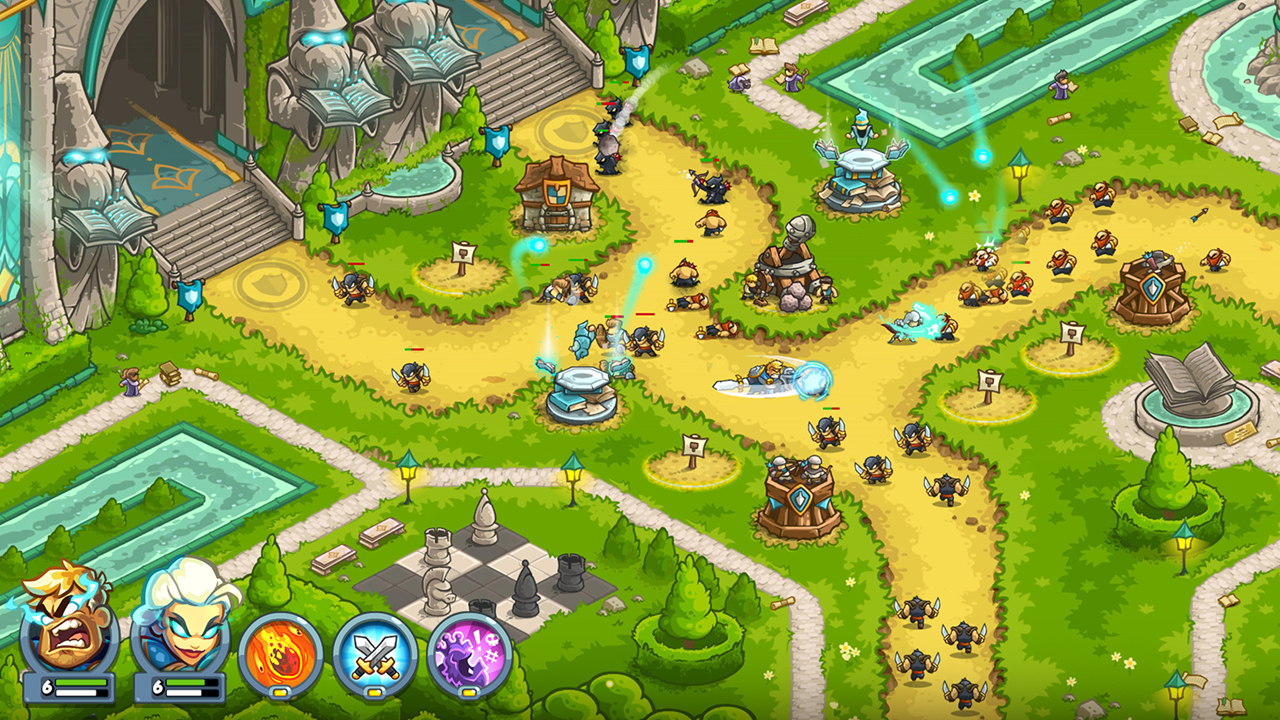
Kingdom Rush 6: Genesis TD arrived on September 24, 2026, on Android, iOS, and Steam. It's the sixth mainline entry from Ironhide Game Studio, and it's a prequel, set in the early days of Linirea before Vez'nan turned into the villain longtime fans know. If you've played any Kingdom Rush game before, the real question isn't whether this is good. It's whether it's different enough to spend money on after five prior entries.
I've put time into the campaign and compared it against the series' history. The honest answer is that Ironhide made one big structural bet, and how you feel about that bet decides everything.
Quick Verdict
| Best for | Veterans who want a fresh angle on familiar towers |
| Skip if | You already bounced off Origins or Vengeance |
| Biggest change | Two heroes per stage instead of one |
| Content | 15 towers, 12 heroes, 9 spells, 18 stages |
| Steam reception | Mixed, 66% positive from early reviews |
What Kingdom Rush 6 Changes From Earlier Games
Every Kingdom Rush sequel faces the same trap. Change too much and the regulars revolt. Change too little and you're selling the same game again. Ironhide's answer this time is the two-hero system.
In every previous entry, you dropped a single hero wherever the line was about to break. One unit, covering one crisis. The skill ceiling came from timing that drop and pairing the hero with the right towers. Kingdom Rush 6 doubles the pieces. You field two heroes per stage, and now you're thinking about how they cover each other, not just where the fire is.
That's a bigger shift than it sounds. Two heroes means two ability cooldowns, two positions, and a constant question of which lane gets left to the towers. It changes how you read a map, and it's the single reason this entry can justify its existence to someone who's already cleared five campaigns.
What Stays the Same in Kingdom Rush 6
The bones are untouched, and that's mostly a compliment. Enemies still march along a fixed path. You still build towers to stop them, upgrade them along skill paths, and scramble when a wave catches you mid-build. The art is still hand-drawn and colorful, and the humor still hides in tooltips and character barbs.
If you loved the rhythm of the earlier games, that rhythm is intact. Kingdom Rush has always been about reading a wave, committing resources, and feeling clever when your placement pays off. Genesis TD preserves that loop and adds a layer on top rather than replacing it.
The series' habit of scattering Easter eggs across maps returns too, and the lore content traces the origins of heroes and artifacts from later games. For veterans, those callbacks are the quiet reward for playing a prequel.
One gripe worth naming: the tower and enemy vocabulary is nearly identical to what you've built against for years. If you were hoping Ironhide would redesign its tower roster, Genesis TD plays it safe. The new heroes matter, but a veteran can look at most of the tower options on day one and know exactly what each one does. That familiarity is comforting for some players and stale for others, and your tolerance for it will shape how much you enjoy the campaign.
How Kingdom Rush 6 Runs on Mobile
Performance is a bright spot. Frames stay steady during heavy waves, and the touch controls respond quickly enough that you're never fighting the interface while you're trying to fire a spell. For a game built around short sessions, that responsiveness matters more than any visual flourish.
The mobile version keeps the full campaign rather than trimming content for phones, so you're not getting a stripped-down port. Plan for a sizable download and check your free storage before you install, since the art assets and stage data add up. The game is free to try with in-app content, and the demo stages let you evaluate the two-hero system before you spend anything. Permissions are modest for an offline-friendly strategy game, which is what you'd expect here.
Kingdom Rush 6 Versus Earlier Kingdom Rush Games
Here's where the comparison gets interesting. The earlier sequels, especially Origins and Vengeance, each tried to differentiate themselves with a mechanical twist. Origins leaned on a hero and a deeper narrative. Vengeance flipped the premise by letting you play the villain's side. Genesis TD's twist is the two-hero pairing, and it's arguably the most impactful design change Ironhide has made since the original.
| Entry | Signature Hook |
|---|---|
| Kingdom Rush (2011) | Established the tower defense formula |
| Frontiers | New settings and hero variety |
| Origins | Stronger story and hero focus |
| Vengeance | Play as the villain, new tower roster |
| Kingdom Rush 6: Genesis | Two heroes per stage, individual upgrade trees |
The other new addition is upgrade trees. For the first time, towers, heroes, and spells each carry their own individual upgrade paths, which deepens the decision-making when you pick a hero pair. In earlier games, tower choice drove most of your strategy. Here, the pairing and its upgrade investments carry real weight.
There's a trade-off hiding in that depth. Newcomers to the series will see the extra upgrade trees as freedom. Veterans used to a leaner system might see them as clutter, since the two-hero juggling already demands attention. Ironhide walks that line reasonably well, but it's the kind of change that splits the fanbase, which the early mixed reviews seem to confirm.
Kingdom Rush 6 Content and Difficulty
The content list is precise. Fifteen upgradeable towers with specialized skill paths. Twelve heroes, which gives you a wide set of pairs to experiment with. Nine equippable spells to swing a losing wave. Eighteen handcrafted campaign stages across three landscapes of Linirea, each with its own hazards and enemy patterns.
Taking them on are more than 40 enemy types across five hostile races, including armored units, flying threats, and stealthy attackers, building toward six large-scale boss encounters. Five difficulty modes cover everything between relaxed and punishing, and the Iron Mode setting shows up even in the demo.
The difficulty curve is the most series-typical part. Early stages are forgiving, later ones punish sloppy hero management, and the bosses are where the two-hero system gets stress-tested. If you found earlier games too easy, the hardest modes will still bite. One thing veterans should know: the campaign assumes you'll replay stages to chase three-star clears and hidden achievements, so the 18-stage count stretches a lot further than it sounds if you go for completion.
Kingdom Rush 6 Pros and Cons
Pros
- Two heroes per stage genuinely changes map reading
- Individual upgrade trees for towers, heroes, spells
- 18 handcrafted stages with distinct hazards and bosses
- Free demo covers four stages and Iron Mode
- Consistent art, humor, and Easter eggs
Cons
- Familiar towers and enemies may feel recycled
- Deep series knowledge isn't required but helps
Is Kingdom Rush 6 Worth Buying?
If you've played a Kingdom Rush game and enjoyed it, the two-hero system is reason enough to come back. It's the freshest mechanical idea in the series in years, and it makes even familiar maps play differently. If you bounced off an earlier entry, Genesis TD's changes probably won't convert you, since the underlying loop is the same one you already left.
Kingdom Rush 6 Specs
| Developer | Ironhide Game Studio |
| Category | Tower Defense / Strategy |
| Released | September 24, 2026 |
| Towers / Heroes / Spells | 15 / 12 / 9 |
| Campaign Stages | 18 across 3 landscapes |
Final Verdict
For veterans, Kingdom Rush 6: Genesis TD is a worthwhile purchase because the two-hero system adds real depth without breaking what made the series work. For newcomers, the prequel framing makes it an easy starting point, and you could also begin with the free demo before committing. The one group that should wait is people who already felt the series was repeating itself, because the core loop hasn't moved. Check your free storage before installing, since a full campaign with 18 stages takes up real space.
Download the latest version from APKPure to try the demo stages on Android, then judge the two-hero system for yourself. If the pairing clicks in the first four stages, the full campaign is an easy call.

Kingdom Rush 6: Genesis TD is a fantasy tower defense game that combines lane defense, heroes, spells, and a story set in early Linirea.

 NEWS
NEWS REVIEWS
 HOWTO
HOWTO