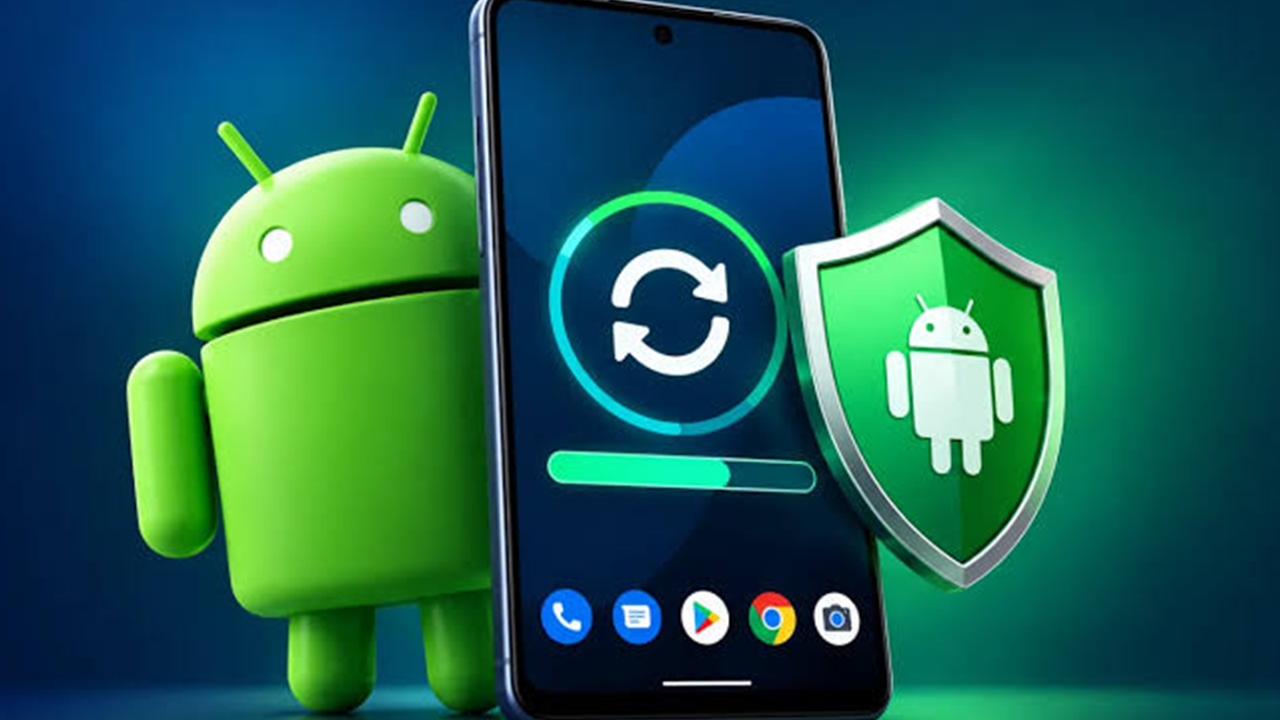


Chrome Now Updates Every Two Weeks: What the New Release Schedule Means

2026-09-18
Chrome switched to a two-week release cycle in September 2026. Here's how the faster cadence changes security updates, version numbers, and Android habits.

Google Chrome is a web browser app that helps you search, read, shop, and manage online tasks.
Chrome 153 landed on September 8, 2026, and with it Google cut its release cycle in half. Chrome used to ship every four weeks. Now it's every two.
That's the plain version of the Chrome two week update schedule. The question worth asking isn't what changed in the calendar. It's whether faster updates actually reach you faster, and what you should do differently on Android because of it.
So which part actually touches your phone? Mostly the security math, not the version number in settings.
Why Chrome Moved to a Two-Week Cadence
Google had been telegraphing this shift for a while. Earlier in 2026 it announced plans to move from a four-week to a two-week release cycle, and the Chrome 153 launch on September 8 turned the plan into practice on desktop, Android, and iOS at the same moment.
The reason isn't cosmetic. AI-driven discovery tools and community bug reports pushed up the volume of patches Google has to manage. A shorter cycle makes that volume easier to handle, because each release carries a smaller set of changes. When something breaks, you can isolate the cause faster, and when a fix lands in the public codebase, the window before it reaches your phone shrinks.
Google calls that window the "N-day" patch gap: the stretch between a vulnerability becoming known and a patch arriving on user devices. Two-week releases keep it as small as possible, which matters when threats move on their own accelerated timetable.
There's a second motive. AI-assisted development reset how fast browsers can ship features, and Google wants the same velocity for its own additions. Shorter cycles give the team more slots to land changes without waiting a month for the next train.
Chrome Update Schedule 2026: What the Calendar Looks Like Now
Under the old system you could roughly predict when a big feature would arrive: once a month, give or take. Under the new cadence, each release is smaller and features show up more often but in thinner slices.
For a concrete anchor, Chrome 154 was already in Beta when Chrome 153 went stable, with a Stable release scheduled for September 22. That two-week gap between Stable launches is now the steady state, and it applies to Desktop and Android at the same pace.
What this changes for you is subtler than the headlines suggest. You'll see the update notification more often, but each one will feel lighter. You won't get a pile of new features every month anymore. You'll get a trickle every fortnight, plus security fixes that land sooner than they used to.
What the Chrome Two-Week Cadence Means for Android
On Android the cadence change is the Chrome Android update you'll notice most, at least in how often the app asks to refresh. Chrome for Android releases now follow the same two-week milestones as desktop, and Android builds carry the same security fixes as their desktop counterparts unless Google notes otherwise.
In practice, that means when a patch for a known vulnerability lands in the desktop release, the Android release gets the matching fix instead of waiting for a separate cycle. If you've ever watched a desktop security fix sit unreleased on your phone for an extra week, that gap is what the new schedule is trying to close.
There's a tradeoff in the smaller scope. A two-week release has less room for the kind of sweeping feature that used to headline a monthly update. Feature drops will feel more incremental. For anyone who cares mostly about security, that's fine. For someone hoping each release brings something big, the pacing is now deliberately modest.
Chrome Security Update Timing and the Patch Gap
This is the part that justifies the whole exercise. A browser is the most exposed app on most phones, and the value of a Chrome security update comes down to how quickly it can be delivered rather than how thorough it is in isolation.
Google's own framing ties the faster cadence directly to its security strategy. Automated AI discovery and community reports generate more patches than a four-week cycle could absorb comfortably. By shipping every two weeks, the company delivers each fix sooner and keeps the gap between public disclosure and your device receiving the fix under tighter control.
For you, the practical habit is simple: install the Chrome update when it appears rather than dismissing the prompt for a week. Under a four-week cycle, a week's delay cost you a quarter of the window. Under two weeks, the same hesitation eats half the time before the next release. The math rewards staying current more than it used to.
That's the whole security case, compressed. Faster shipping only helps if you ship.
Chrome 152 Update and Why Version Numbers Look Confusing
Here's where things trip people up. Chrome 152 update references are still floating around, and that's normal under the current structure. Chrome maintains multiple channels at once, and an older milestone can still be live on some channel even after a newer one ships.
The Extended Stable channel is the clearest example. It was updated to 152.0.7977.130 for Windows and Mac in September, and it keeps getting weekly security backports. Extended Stable lags on features on purpose. Major feature updates arrive there every eight weeks, so Chrome 156 and Chrome 160 mark its milestone boundaries while the regular channel races ahead on a two-week beat.
If you're on regular Stable on your phone, you're already past 152 for features. Seeing a 152 build mentioned somewhere isn't a sign your device is behind. It's a sign another channel is doing its own thing, which is by design.
Who Benefits From Chrome's New Release Cadence
The Chrome new release cadence spreads its benefits unevenly, so it's worth being honest about who gains most.
Regular users gain through timing. Security fixes reach you sooner, and you're never far from a patch. Web developers gain because features land on a predictable two-week beat. Google frames it as tighter deployment windows and faster interoperability updates, meaning a feature you build against arrives on more users' devices with less waiting.
Enterprise admins get the interesting case. Google's guidance says the two-week Stable option is now the most secure choice and should be the default for most enterprise users. That flips the old instinct, where a slower channel felt safer because it changed less often. Under the new math, moving fast on Stable means moving fast on security. Teams that can't handle a two-week rhythm can stay on Extended Stable, but they trade that faster patch delivery for fewer feature milestones, with security fixes still backported weekly.
Not everyone wins equally. Anyone who tests extensions or internal web apps against new Chrome releases now has half the time between milestones, and Google tells admins to build those eight-week boundaries into their test pipelines. That's real overhead, and it lands on the people with the least slack.
Limitations to Keep in Mind
Faster doesn't automatically mean better, and a few honest caveats are worth keeping.
Smaller releases mean smaller feature scope, so if you enjoy the occasional chunky Chrome update, that experience is largely gone. Ten-week gaps between big features are now eight-week gaps on Extended Stable, while regular Stable gets a steady drizzle rather than weather events.
The increased update frequency also asks more of you. More prompts, more restarts, more chances to dismiss a notification and fall behind. The security benefit only shows up if you actually install what arrives.
And the cadence shift is a delivery change, not a capability one. It doesn't make Chrome faster or safer on its own. It changes how quickly fixes travel from the source to your device, which is a real gain but a narrow one. If you were hoping the schedule change brings new features, it doesn't, at least not by itself.
Bottom Line
The two-week Chrome cycle is a delivery decision, and its payoff depends on what you do with it. On Android, that means treating the update prompt as part of your routine instead of an interruption, because the schedule only protects you if you keep pace with it.
Developers and enterprise teams should plan around the new rhythm now rather than retrofitting later. Regular users mostly need one habit: install when Chrome asks. Chrome itself keeps evolving on the same priorities as always, and this change adjusts speed up and down without touching what the browser does.
Google Chrome is a web browser app that helps you search, read, shop, and manage online tasks.
 NEWS
NEWS REVIEWS
 HOWTO
HOWTO