

DeepSeek vs ChatGPT: Which AI Is Better?

2026-08-04
DeepSeek vs ChatGPT: we compare features, pricing, reasoning, and real-world performance to help you decide which AI assistant is right for you.
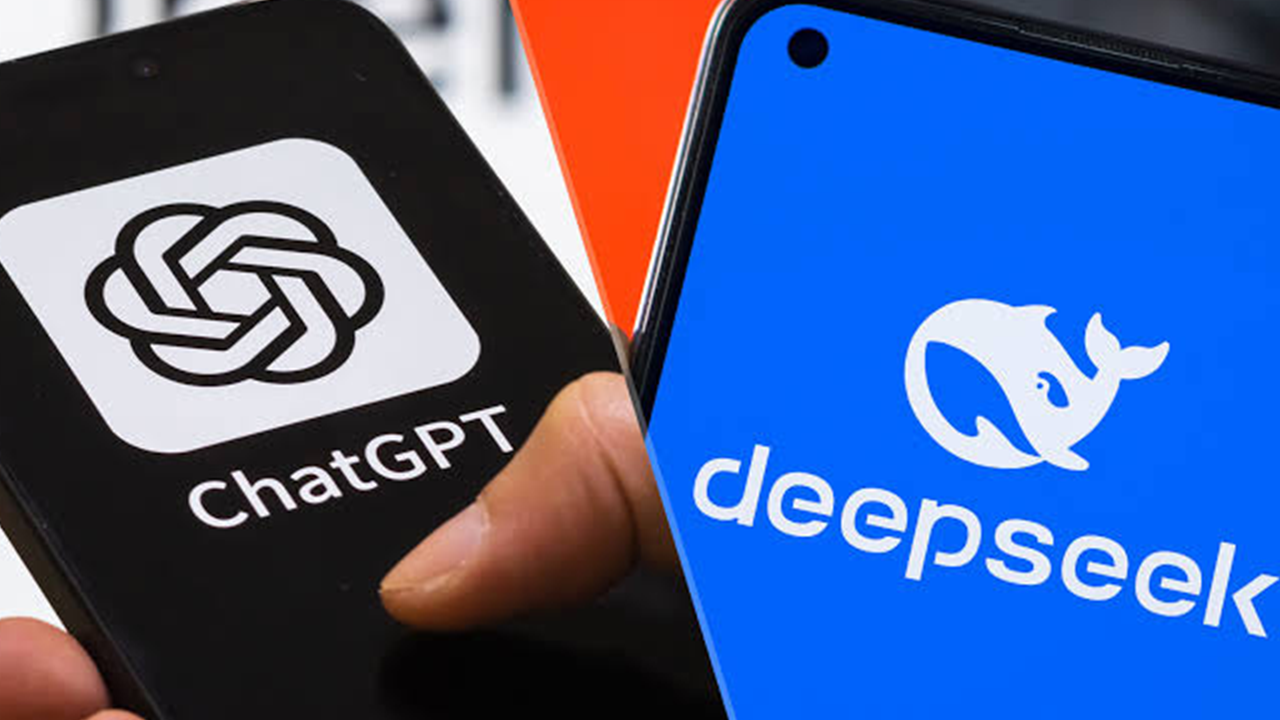

If you've been using ChatGPT and wondering whether DeepSeek is worth switching to, you're not alone. When a Chinese hedge fund's side project topped the App Store charts and caused Nvidia's stock to drop $600 billion in a single day, the question stopped being academic. We tested both AI assistants side by side in a real-world DeepSeek vs ChatGPT comparison across the tasks people actually use them for. Here's what we found.
The Big Picture
DeepSeek and ChatGPT solve the same problem in fundamentally different ways. ChatGPT is a polished product with an full toolset of plugins, image generation, voice chat, and a fast-growing agent platform. DeepSeek is a lean, open-source engine that competes by being cheaper and more transparent.
The short version: ChatGPT is the better all-around assistant if you're willing to pay. DeepSeek is the better free option by a wide margin, and in a few specific areas like transparent reasoning and code generation, it matches or exceeds what you get from ChatGPT Plus.
Pricing: The Elephant in the Room
This is where the comparison gets lopsided fastest.
ChatGPT pricing (as of mid-2026):
- Free: GPT-5.6 Luna access with usage caps and reduced context length
- Plus ($20/month): Full GPT-5.6 Terra, expanded limits, basic multimodal features
- Pro ($200/month): GPT-5.6 Sol, unlimited usage, advanced reasoning, priority access
DeepSeek pricing:
- Consumer app: Completely free. No caps, no subscription, no credit card required.
- API: Pay per token, starting at roughly $0.28/million input tokens for V4-Flash.
If you need an AI assistant every day and don't want to budget $20 a month for it, this isn't a close call. DeepSeek gives you a reasoning model, file uploads, web search, and a 1-million-token context window at zero cost. ChatGPT's free tier feels deliberately limited next to it.
Free isn't everything, though. ChatGPT's paid tiers come with capabilities DeepSeek simply doesn't have: native image generation (DALL-E), real-time voice conversation, Codex agent for programming, and a marketplace of custom GPTs. If you use those features regularly, ChatGPT Plus at $20/month may be worth it.
Reasoning: DeepThink vs o3
Both AI assistants offer a reasoning mode that shows intermediate steps before giving a final answer. The experience is quite different.
DeepSeek DeepThink (R1). When you enable it, a separate panel opens and shows the model working through the problem. You watch it test hypotheses, discard wrong approaches, and narrow in on a solution. For math problems and coding logic, it's genuinely useful. You can spot where the model takes a wrong turn and understand why it reached its conclusion.
ChatGPT reasoning (o3). ChatGPT's reasoning is hidden by default. You get a summary of what it considered, but you don't see the raw chain of thought. OpenAI has said this is partly for safety and partly because the raw reasoning tokens can be messy. The final outputs are strong, often stronger than DeepThink on complex multi-step problems. But you're taking the result on faith.
On Reddit, the DeepSeek R1 vs ChatGPT debate tends to favor o3 for raw accuracy on hard problems and DeepSeek R1 for understanding how an answer was reached. Most "deepseek vs chatgpt reddit" threads agree on this split. One Reddit user put it well: "o3 gets the right answer more often. R1 shows me why it's right, and sometimes catches itself being wrong."
Everyday Tasks: Writing, Research, and Chat
For the kind of work most people do most of the time, the gap is smaller than you might expect.
Writing. ChatGPT produces more natural English prose. Its tone is conversational, varied, and less likely to trigger "AI detector" alarms. DeepSeek's writing is competent but leans formal and structured. It's fine for emails, reports, and outlines. For creative writing, marketing copy, or anything where voice matters, ChatGPT wins.
Research. Both handle web search well, pulling in current information and citing sources. DeepSeek's 1-million-token context window (on V4) means it can process entire research papers or book-length documents in a single conversation. This is genuinely useful for academic work or long-form analysis. ChatGPT offers up to 128K tokens on free and Plus plans, with larger windows on Pro.
Casual chat. ChatGPT feels more human in back-and-forth conversation. It picks up on tone, remembers preferences across sessions, and adjusts its personality to match. DeepSeek is more utilitarian. It answers your question and moves on. If you're using an AI assistant as a thinking partner rather than a search replacement, ChatGPT is the better conversationalist.
Code: Where DeepSeek Holds Its Own
Coding is one area where the Reddit community consistently rates DeepSeek highly, and our testing backs that up.
Both AI assistants generate correct, working code for common tasks. Where they differ:
- DeepSeek handles algorithmic problems and competitive programming challenges well. Its reasoning mode methodically walks through edge cases. For Python and general-purpose scripting, the output is reliable with few hallucinations.
- ChatGPT is stronger at full-stack development. It knows the latest React patterns, understands project structure, and generates code that fits into existing codebases. The Codex agent can read your entire project and work across files, something DeepSeek's interface doesn't support.
For quick scripts, data analysis, and algorithm questions, DeepSeek is more than adequate. For building applications, ChatGPT with Codex is substantially more capable.
Multimodal: ChatGPT's Clear Lead
This is the biggest feature gap between the two AI assistants.
ChatGPT can:
- Generate images with DALL-E (included in Plus)
- Analyze uploaded images and screenshots
- Have real-time voice conversations (Advanced Voice Mode)
- Process video inputs (GPT-5 era)
- Run code in a sandbox and show you charts and graphs
DeepSeek can:
- Analyze uploaded images (V4 only, relatively new)
- Accept voice input (mobile app, transcription only)
- Process uploaded files (PDFs, spreadsheets, documents)
If you regularly ask your AI assistant to generate images, analyze photos, or talk through ideas out loud, ChatGPT is the obvious choice. DeepSeek is a text-first tool, and its multimodal features, while improving, aren't close to parity yet.
Privacy and Data
Both assistants collect conversation data for model improvement by default.
ChatGPT offers opt-out for training data (in settings) and has SOC 2 compliance. As a US-based company, it falls under US data protection laws. Enterprise and Team plans come with additional data processing agreements.
DeepSeek, as a Chinese company, operates under different legal frameworks. Its privacy policy allows collection of text inputs, chat history, and device information. Several countries, including South Korea and Italy, have investigated or restricted the DeepSeek app over data concerns. The open-source models can be downloaded and run locally, which sidesteps the privacy issue entirely if you have the hardware.
For casual use, the difference may not matter. For business or sensitive personal data, it's worth understanding where your conversations are stored and who can access them.
Pros and Cons
DeepSeek Pros:
- Completely free with no usage limits
- Transparent DeepThink reasoning shows exactly how it arrives at answers
- 1-million-token context window on V4
- Strong code generation, especially for algorithms
- Open-source models available for local deployment
- Fast response times for standard queries
DeepSeek Cons:
- No native image generation
- Voice input is transcription only, no real-time conversation
- English writing prose is competent but not natural sounding
- Privacy policy raises data concerns for sensitive use
- Fewer plugins and integrations available
- Server congestion during peak hours
ChatGPT Pros:
- More natural writing, especially for creative and conversational tasks
- Full multimodal support: images, voice, video
- Codex agent for software development across entire projects
- Wide range of plugins, custom GPTs, and integrations
- Stronger at complex multi-step reasoning
- Better memory and personalization across sessions
ChatGPT Cons:
- Free tier is heavily limited
- $20/month for meaningful access to best models
- Reasoning chain is hidden, not transparent
- Requires account and phone verification
- Can be slow during peak demand periods
Which One Should You Use?
Choose DeepSeek if:
- You want a capable AI assistant without spending money
- You do a lot of coding, math, or logic work and want to see the reasoning
- You need to process very long documents (books, research papers)
- You care about running AI models locally for privacy
- You're satisfied with text-based interaction and don't need image generation or voice chat
Choose ChatGPT if:
- You're willing to pay $20/month for a more polished experience
- You need image generation, voice conversation, or multimodal features
- You're building applications and need an AI agent that works across files
- You write creatively or in English and care about natural prose
- You want broad integrations with other tools and services
Use both. Plenty of people do. DeepSeek for free daily tasks and deep reasoning, ChatGPT for creative work, multimodal needs, and software development. There's no rule that says you have to pick one.
Verdict
DeepSeek isn't strictly better or worse than ChatGPT. It's better at being free, transparent, and open. ChatGPT is better at being a complete assistant with a rich platform behind it.
If we had to recommend just one to the average person, ChatGPT Plus at $20/month still edges ahead on overall capability. But "overall capability" is a moving target, and the gap has narrowed significantly. For anyone who'd rather not pay, DeepSeek is easily the best free AI chatbot you can install right now.

DeepSeek is an AI assistant app that offers free access to its latest reasoning model.
 NEWS
NEWS REVIEWS
 HOWTO
HOWTO