

FNAF 1 Review: Is Five Nights at Freddy's Still Worth Playing in 2026?

2026-07-23
Our FNAF 1 review after replaying in 2026. How does the original Five Nights at Freddy's hold up? We break down the gameplay, scares, mobile port quality, and whether it's still worth your time.
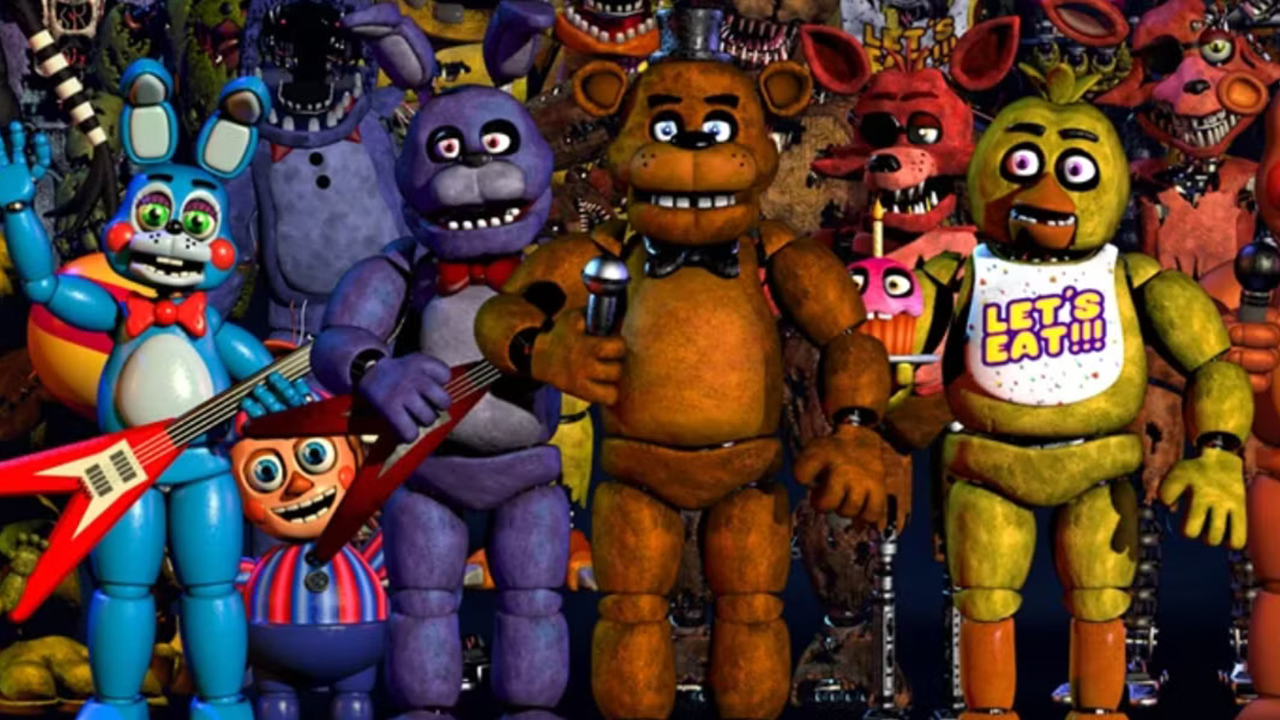

Five Nights at Freddy's is a survival horror game that challenges you to survive night shifts at a pizza restaurant.

I first played Five Nights at Freddy's when it launched in 2014, and I just replayed it on Android in 2026. That's a twelve-year gap, which for horror games might as well be a century. Most scares age poorly. Jump scares become predictable. Graphics that looked gritty in 2014 look muddy now. The real question is whether it still works today.
The short answer: yes, it mostly does. But not for the reasons I expected.
My first Night 1 replay felt almost nostalgic. Phone Guy's chipper "Hello? Hello hello?" played through my earbuds, and I sat in that cramped security office watching Bonnie twitch on stage. Same grainy camera feeds. Same flickering hallway lights. Same oppressive silence broken by distant metallic clanks. Everything was exactly how I remembered it.
By Night 3, nostalgia had worn off and genuine tension had replaced it. My power was at 45%. Freddy was somewhere in the darkness of CAM 6, and I'd just heard him laugh for the third time. I realized my palms were sweaty. On a game I've beaten before. On a game that's twelve years old. That's not nostalgia. That's craftsmanship.
What FNAF 1 Gets Right
The core design is elegant in a way that most indie games don't achieve. Every system pulls in the same direction: making you feel helpless without taking away your agency.
You have four defensive tools. Two lights, two doors, and a camera tablet. That's it. No weapons. No sprint button. No hiding spots. The game strips away every safety net you'd normally expect from a horror game and leaves you with a fixed perspective, limited resources, and enemies that cannot be fought.
The power meter is the quiet genius of the design. It turns every action into a tradeoff. Light a hallway to check for Bonnie and you've spent power that could've kept a door closed later. Pull up the camera to find Freddy and you've let down your guard on Foxy's Pirate Cove. The game forces you to constantly triage threats, and you never feel like you've made a clean choice. Every decision feels slightly wrong, slightly risky. That's the whole point.
The sound design deserves a separate mention. FNAF 1 communicates almost everything through audio. Bonnie's heavy footsteps thudding down the left hall. Freddy's low, echoing laugh that tells you he's moved one room closer. The distinct metallic shuffle of Chica in the kitchen. Foxy's sprint, which is terrifying even when you know it's coming because the sound hits first and your brain fills in the rest. You can close your eyes and track the entire game state just by listening. Very few horror games achieve this level of audio clarity.
The animatronic designs also hold up. Not the models themselves , those are clearly 2014-era pre-rendered art. What holds up is the concept. These aren't monsters or ghosts or even traditional horror villains. They're children's entertainment robots with dead eyes and frozen grins, walking around a dark pizzeria. The uncanny valley effect is baked into the premise. It works without needing expensive assets or advanced rendering.

What Doesn't Hold Up
Visually, FNAF 1 shows its age. The camera feeds look like security footage from 2001, which was intentional for atmosphere but now reads more as technical limitation than artistic choice. The jumpscares , the series' claim to fame , have lost most of their impact. After twelve years of FNAF clones, YouTube reaction compilations, and a Hollywood movie, seeing a cartoon bear fill your screen and scream at you just doesn't hit the same way.
This matters because FNAF 1 literally ends when you fail with a jumpscare. There's no death animation variety, no failure state that adds to the story. You just get a face full of animatronic and a game over screen. In 2014, that was novel. In 2026, it's a known commodity.
The mobile port on Android is functional but not great. The touch controls work , tap left side for the left light and door, tap right side for the right, swipe to peek at cameras , but the lack of tactile feedback means you'll occasionally fat-finger the wrong button under pressure. On Night 5, when milliseconds matter, that's genuinely frustrating. The Android version also lacks the polish of later mobile ports in the series. No graphical options, no control customization, no accessibility settings. What's there works, but the bar has moved since 2014 and this port hasn't.
The game is also short. Very short. You can finish Nights 1 through 5 in about an hour if you know what you're doing. Custom Night extends the playtime, but unless you're chasing the 4/20 achievement, there aren't many reasons to replay once you've beaten the main content.
The Lore Problem
I need to address the story. Or rather, the lack of one.
FNAF 1 has lore. Newspaper clippings on the walls hint at missing children. Phone Guy's messages get more nervous as the nights progress. Golden Freddy's existence suggests something supernatural is happening. But the game never actually tells you a story. It scatters breadcrumbs and asks you to assemble them into a narrative.
This approach created one of the most active fan communities in gaming history. People spent years to piece together timelines, debate theories, and fill wiki pages with speculation. The ambiguity was a feature, not a bug.
But revisiting FNAF 1 in 2026, the story feels incomplete in a way that wasn't obvious at launch. The "mystery box" style of storytelling worked when the community was actively solving the puzzle together, but coming to it now as a solo player, the lack of resolution leaves you wanting. You finish Night 5 and receive a paycheck. That's it. The missing children, the possessed robots, the referenced "Bite of '87" , none of it gets addressed. It's all setup for sequels that didn't exist yet.
If you're playing for the story, you need to be okay with getting questions instead of answers. The actual narrative doesn't start getting delivered until FNAF 2 and beyond.
FNAF 1 vs Later Games in the Series
Comparing FNAF 1 to FNAF 2 or Security Breach is tricky because they're fundamentally different games. FNAF 1 is the purest expression of the formula: one office, four enemies, five nights. FNAF 2 adds more cameras, more enemies, a music box mechanic, and a flashlight. It's more complex but also more frantic , sometimes too much. FNAF 1's restraint works in its favor.
Security Breach is a completely different genre. Free-roaming 3D exploration, inventory management, stealth segments. There are direct comparisons worth making between FNAF 1 and 2, but by Security Breach the series has reinvented itself entirely.
For someone new to the franchise, FNAF 1 is the correct starting point. Not because it's the best game (opinions differ), but because everything else in the series assumes you know what was established here. The mechanics, the character behaviors, the tone , it all originates in the first game.
Should You Play FNAF 1 in 2026?
If you're new to the series and curious where it all began, FNAF 1 is worth the hour or two it takes to beat. The core gameplay loop still produces genuine tension, the sound design remains exceptional, and experiencing the genesis of the franchise has value beyond the game itself. The mobile version on Android runs fine and the touch controls, while imperfect, don't ruin the experience.
If you already know the series through later games or the movie, temper your expectations. You're playing a twelve-year-old indie horror game where you mostly stare at static cameras and close doors. The scares that worked in 2014 might not land the same way now. But the atmosphere, the resource management tension, and the sense of being hunted by something you can't fight , those haven't diminished at all.
And at the price point, there isn't much to lose. You can download Five Nights at Freddy's on APKPure and be playing within minutes. Even if you only make it through a few nights before the jumpscares lose their punch, you'll understand why a single developer working alone created a franchise that's still going strong twelve years later.
Five Nights at Freddy's is a survival horror game that challenges you to survive night shifts at a pizza restaurant.
 NEWS
NEWS REVIEWS
 HOWTO
HOWTO