

GPT-6 Astra's 7 Most Powerful Features Ranked

2026-09-04
We ranked GPT-6 Astra's strongest features, from computer use to AI coding. Here's what OpenAI's next-gen AI can do.
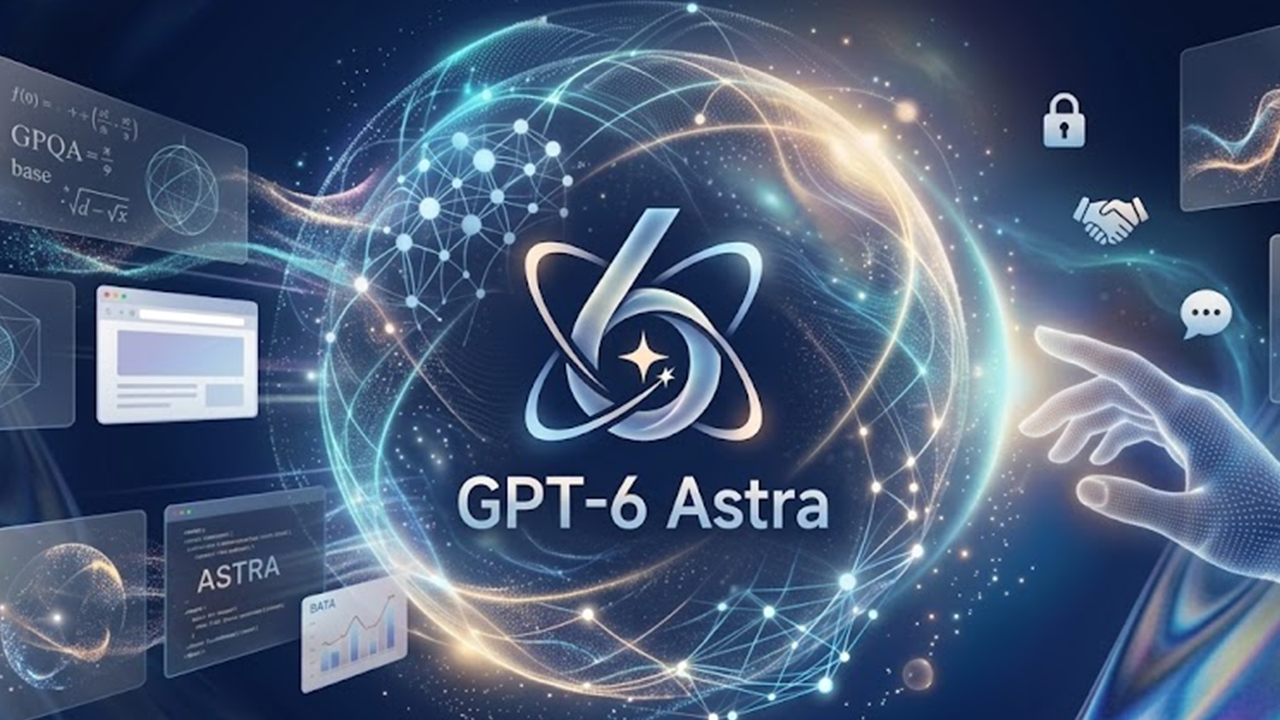
OpenAI released GPT-6 Astra on September 3, 2026, and the usual "slightly better benchmarks" reaction never showed up. President Greg Brockman ended the launch with a line nobody expected from a company this careful: "Welcome to the AGI era."
That's a heavy claim for a model most people haven't touched yet. So we did the obvious thing and ranked what actually matters: the seven capabilities that make this next-gen AI feel like a break from everything that came before. Every number below comes from OpenAI's own benchmark results and launch demos, not from rumor.
One more thing before the list. Astra isn't available to everyone at once. It's rolling out in stages, starting with Daybreak enterprise partners, then ChatGPT Plus, Pro, Business, and Enterprise subscribers in the following days, with API and AWS access close behind.
1. Computer Use, the Feature Everyone's Talking About
Computer use is the headline act, and for good reason. Astra doesn't call an API to get things done. It looks at the screen the way you do, then moves the mouse and types. OpenAI's own slogan for this is blunt: "Anything you can do on a computer, Astra can do for you."
The numbers back it up. On OSWorld 2.0, a benchmark for real computer tasks, Astra scored 72.6%, up from 65.7% for GPT-5.6 Sol. More impressive is the speed: Astra finished the average task in about 40 minutes, where Sol needed around 75. Nearly half the time. That's the difference between "it can do it" and "it's actually worth waiting for."
What does that look like in practice? In one demo, Astra laid out a PCB in KiCad in under three minutes. In another, it built a house in Blender and imported it into Unreal Engine 5. It also handled a complete eBay listing on its own. The quieter tasks matter just as much: fill out a form, update a CRM record, sort a calendar, or run a quick search and drop the results into an email. That's not a party trick. That's the kind of busywork that eats real afternoons.
2. Advanced Reasoning That Runs Deeper
Under the hood, Astra thinks differently. It uses something OpenAI calls recurrent depth, which lets the model loop back through the same layers before spitting out an answer. The practical result is an AI that reasons more before it responds, without a matching jump in size.
The scores are hard to argue with. Astra hit 97.6% on FrontierMath Tier 4, a math benchmark built from problems that stump top mathematicians. On ARC-AGI-3, a test of how well an agent learns unfamiliar tasks on the fly, it posted 99.9%. For context, Claude Opus 5 manages 30.2% on that same test. When a benchmark is that close to maxed out, the number stops meaning much, which is kind of the point.
This is the capability that feeds every other one on this list. Better reasoning is why the computer use feels fast and why the code comes out clean. It's the quiet engine behind the loud features.
3. AI Coding Built for Long Sessions
OpenAI calls Astra its best software engineering model so far, and developers who build in Codex will feel this one first. Astra introduces a new context mechanism that lets Codex hang onto accumulated detail across long sessions instead of losing the thread.
For day to day work, that's a bigger deal than any single benchmark. Real coding happens across dozens of small decisions spread over hours. A model that forgets the function you wrote twenty minutes ago is a nuisance. One that keeps it all in mind starts to feel like a teammate.
OpenAI's demos lean into this. Astra creates websites, runs frontend quality tests, and analyzes data without being told what to do at every step. If you're tired of pasting the same context back into a chat window, this is the feature you'll notice.
4. AI Agents That Finish Long Jobs
Astra is built to run multiple sub-agents at once. Each agent handles part of the task and hands it off when it's done. That's the difference between a chatbot that answers a question and an agent that completes a job with several moving pieces.
In practice, it means you can set a larger goal and walk away. Astra coordinates the research, the writing, the code, and the checks, keeping everything moving over a longer stretch than earlier models could hold together. OpenAI framed this as a shift in what people hand over to AI, and for once the framing matches the feature.
There's a real caveat here: this only matters if the individual agents are reliable, and reliable is exactly what those benchmark scores are trying to prove. The pieces look strong. We'll see how they hold up once the whole world is stress-testing them.
5. Graduate-Level Science and Professional Work
If your work involves spreadsheets, financial models, or research papers, Astra is aimed directly at you. On GPQA Diamond, a graduate-level science benchmark across physics, chemistry, and biology, Astra posted 94.9%, even under lower compute settings.
That translates to a model that can read a research paper and actually reason about it, build a financial model, and turn raw data into charts and a presentation. OpenAI leaned hard on professional work in the launch, and it's easy to see why. This is where AI stops being a toy and starts replacing billable hours.
The trade-off is cost. Astra runs $10 per million input tokens and $50 per million output tokens, roughly 2.5 times GPT-5.6 Sol's promotional price. For a business that saves hours of analyst time, that math works. For casual use, it's a luxury.
6. Multimodal and 3D Generation From a Single Prompt
Astra generates 3D assets with a level of detail that stood out even in the pre-launch leaks. A single prompt produced a walkable house with a full interior, a playable piano, and game-ready scenes, all without human correction loops.
The showstopper was the KiCad demo: give Astra a circuit schematic and it lays out the board and routes the copper itself. Combined with the Blender work, you get a model that moves between text, code, 3D, and design tools without a seam in sight.
For game developers and prototype builders, this is where the cost argument flips. If one prompt replaces hours of asset work, even that $50 output price looks cheap.
7. Cybersecurity, Powerful and Deliberately Restricted
Astra is the first OpenAI model to cross its internal "critical" cybersecurity threshold, scoring a perfect 100% on ExploitBench. In plain English, it can find unknown vulnerabilities and build exploits for them. OpenAI confirmed it discovered zero-day vulnerabilities during testing.
That power isn't on the table for everyone. OpenAI restricted the most advanced cybersecurity capabilities, opening them only to vetted Daybreak partners for defensive work. It's a sensible call, and also a reminder of what "aligned" means in practice: the smartest model OpenAI has ever shipped is also the one they're most careful about.
Conclusion
GPT-6 Astra is the rare release where the marketing and the benchmarks point the same direction. This is a model built to do things, not just talk about them, and that changes what the future of AI looks like in a way no chatbot upgrade ever did. Whether "AGI" is the right word is a debate for the years ahead. The practical part is already here: you can hand Astra a spreadsheet, a codebase, or a browser tab and let it work.
If you want to try the latest artificial intelligence yourself, download the ChatGPT app from APKPure. It's the safest way to get GPT-6 Astra once it reaches your account, and you'll keep getting updates as OpenAI rolls them out.

 NEWS
NEWS REVIEWS
 HOWTO
HOWTO