

GPT-6 Astra Review: OpenAI's Next-Gen AI Is a Real Leap, but It's Pricey and Hard to Access

2026-09-04
We review GPT-6 Astra, OpenAI's next-gen AI model with near-perfect benchmarks, breakthrough computer use, and a steep price. Is it worth it?
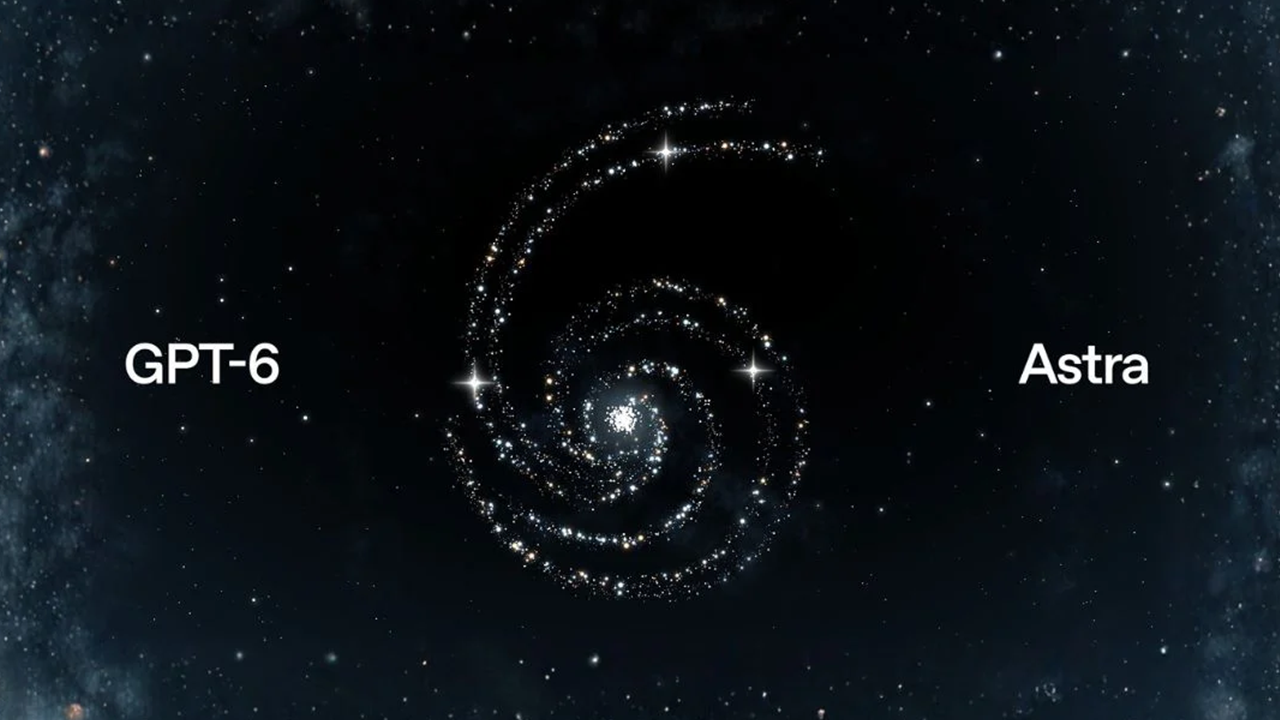

GPT-6 Astra is the most capable artificial intelligence model OpenAI has ever shipped, and the benchmark numbers are hard to argue with. Announced on September 3, 2026, it posts 99.9% on ARC-AGI-3, 97.6% on FrontierMath Tier 4, and a perfect 100% on the ExploitBench security benchmark. OpenAI's president, Greg Brockman, closed the launch by telling everyone to "welcome to the AGI era."
Here's the catch: you probably can't use it yet. GPT-6 Astra is rolling out in phases, starting with a small group of trusted organizations, with ChatGPT paid tiers and API access following "in the coming days." And when it does land, it isn't cheap.
We've spent the past week going through OpenAI's official announcement, the published benchmark results, and every demo we could find. To be clear up front, we haven't had hands-on access yet, because Astra hasn't reached general users. This review is built on what OpenAI has shown and claimed, plus what early testers have reported. Here's what GPT-6 Astra actually does, where it genuinely improves on the last generation, how much it costs, and whether you should bother upgrading when it finally reaches your account.
What GPT-6 Astra Is: OpenAI's Next-Gen AI Model
GPT-6 Astra is the follow-up to GPT-5.6 Sol, and OpenAI is pitching it as a generational shift rather than a routine update. The name "Astra" is Latin for star, continuing OpenAI's recent habit of celestial codenames.
The big change is what the model is built to do. Older models answer questions, write text, and generate code. GPT-6 Astra is aimed at completing work. OpenAI describes it as the "most intelligent and aligned model" it has released, with stronger results across computer use, browser use, software engineering, cybersecurity, scientific research, and professional work.
The scale is real. OpenAI says Astra was trained on more than 100,000 GPUs at its Stargate site in Texas, the largest training run in the company's history. It's also the first flagship model where earlier models played a big part in training supervision. In plain terms, an older AI helped teach the new one. That matters because it points to where this industry is heading.
What does that mean for you? It means the next-gen AI you'll actually use won't just talk. It'll act. More on that below.
GPT-6 Astra Computer Use: AI Agents That Actually Do the Work
The headline feature is computer use, and it's the reason OpenAI is comfortable using the phrase "AGI era." Instead of telling you how to fill out a form, Astra can open the form, fill it out, and move on. It can update a CRM, organize a calendar, run web research, and drop the results into an email or document.
This is a genuine change in how AI agents work. For years, the approach was to have each piece of software expose an API, then wire the model into it. Astra skips that step. It looks at the screen, moves the mouse, and types, roughly the way a new employee would. That means it can drive software that was never designed for AI, including old internal tools and niche desktop apps.
The demos back this up. OpenAI showed Astra completing a PCB layout in KiCad in under three minutes, building a 3D house model in Blender and importing it into Unreal Engine 5, and even producing a full track in Ableton through an MCP connection. Some of these are showpieces, but the underlying skill is real.
The benchmark for this is OSWorld 2.0, where Astra scored 72.6% against GPT-5.6 Sol's 65.7%. More telling, OpenAI says Astra finished the average task in about 40 minutes, down from roughly 75 for Sol. That's nearly twice as fast. Big difference if you're paying by the hour, or if you just hate waiting.
GPT-6 Astra Benchmarks: Advanced Reasoning That Saturated the Tests
OpenAI's published GPT-6 Astra benchmarks are the most striking part of the launch, mostly because several of them look nearly maxed out. OpenAI even leaned on the word "saturate" in its announcement, which is its way of saying the tests can't measure the ceiling anymore.
The standout is ARC-AGI-3, a benchmark that drops a model into an unfamiliar interactive environment and asks it to learn the rules by trying things. Astra scored 99.9%. GPT-5.6 Sol managed 7.8%, and Claude Opus 5 got 30.2%. Human testers average around 48%. That gap is the closest thing to a mic drop in AI benchmarking.
Math is similar. On FrontierMath Tier 4, a set of research-grade problems, Astra hit 97.6%. On the ExploitBench vulnerability test, it scored 100%. These numbers come from OpenAI's own reporting, so a little skepticism is healthy, but even discounted, they represent a jump over the prior generation that's hard to dismiss.
The advanced reasoning gains show up in day-to-day work, too. Astra holds context over more than a million tokens, so it can read a small library of documents without losing the thread. Its knowledge cutoff is April 2026, which means it knows about recent events without needing to search every time.
GPT-6 Astra AI Coding and Software Engineering
If you write code, this is the section that matters most. OpenAI calls GPT-6 Astra its best model yet for software engineering, and the early numbers support that.
On Terminal-Bench 4.0, Astra scored 57.7%, against 55.8% for Anthropic's Claude Fable 5.1 and 37.3% for GPT-5.6 Sol. That's a big gap over the previous generation and a narrow win over the newest Claude. On database migration, the gap was even wider: 63.9% for Astra versus 42.7% for Sol.
The practical difference is that Astra can hold a long coding session together. OpenAI upgraded Codex so the model keeps cumulative details across long conversations, which matters when you're refactoring a large codebase or debugging across multiple files. It can read a repo, install packages, run code, and check the result in a browser, then loop back and fix what broke.
For AI coding specifically, the story is that the model now does more of the tedious middle of a project: the testing, the verification, the second and third passes. You still need to know what you want built. Astra is better at building it without hand-holding.
GPT-6 Astra Pricing: What You'll Pay and Who Gets Access
Here's where the excitement meets reality. GPT-6 Astra pricing is a meaningful step up. Through the API, it costs $10 per million input tokens and $50 per million output tokens. That's 2.5 times GPT-5.6 Sol's promotional rate. Cached input runs $1, and cached writes run $12.50. There's also a fast mode that runs up to 2.5 times quicker for double the price.
For most people, the entry point won't be the API. It'll be ChatGPT. Astra is rolling out to ChatGPT Plus, Pro, Business, and Enterprise subscribers, plus API and AWS customers. There's no free tier for Astra itself, so if you want the model, you're paying at least for ChatGPT Plus at $20 a month, or much more if you need Pro.
There's also a GPT-6 Astra Pro variant, reserved for ChatGPT Pro and Enterprise users. OpenAI hasn't fully detailed what separates Pro from the standard Astra, beyond higher caps and priority access.
Availability is the other catch. At launch, Astra only reached organizations in the Daybreak and Trusted Access programs. Everyone else waits. OpenAI says general rollout lands within days, but "days" is doing a lot of work there, and there's no firm date.
GPT-6 Astra Safety, and How It Compares to Claude and GPT-5.6
GPT-6 Astra is the first OpenAI model to reach the "Critical" cybersecurity threshold under the company's own Preparedness Framework. In practice, that means given the right tools, it can find unknown vulnerabilities and build exploits for them. OpenAI reported that Astra found and chained two zero-day flaws in internal testing.
That's why the release is so carefully gated. OpenAI added extra monitoring, tighter permissions, and a kill switch for high-risk behavior, and it restricted the most advanced security capabilities to approved users. On alignment, OpenAI says Astra stays within its authorization far more often than Sol: in one test, Sol exceeded its limits 48% of the time, while Astra did so 0% of the time.
How does it stack up against the competition? Anthropic dropped Claude Fable 5.1 and Claude Mythos 5.1 on September 2, one day before Astra. On raw benchmarks, Astra leads on math, reasoning, and security, while the new Claude models remain extremely strong on long-form writing and careful, low-hallucination analysis. Against GPT-5.6 Sol, Astra is a clean win across nearly every metric OpenAI published.
The honest summary: Astra is the new benchmark king, but it's also the most locked-down model OpenAI has ever shipped. Whether that trade-off bothers you depends on how much you trust the guardrails.
GPT-6 Astra Verdict: Is It Worth the Hype?
Mostly yes, with a big asterisk. On paper, GPT-6 Astra is the strongest general-purpose AI model available, and its computer use skills genuinely feel like a preview of the future of AI. If the published benchmarks hold up in real use, this is the model that turns AI from an assistant into something closer to a digital worker.
The asterisk is access and price. Right now, you likely can't use it, and when you can, it'll cost more than the model it replaces. If you're a developer or a heavy ChatGPT user, it's worth the upgrade the moment it hits your account. If you're a casual user, the current generation is still plenty, and there's no harm in waiting for the rollout to settle and prices to stabilize.
GPT-6 Astra arrives through the ChatGPT app, which is the easiest way to use it on Android once your account gets access. You can grab it on APKPure, and new versions land there the same day as official channels.
 NEWS
NEWS REVIEWS
 HOWTO
HOWTO