

Sunbird Review 2026: iMessage on Android Worth It?

2026-09-22
Sunbird review: the rebuilt iMessage for Android app costs $2.99 a month. See how it works, its security claims, and whether RCS makes it pointless.
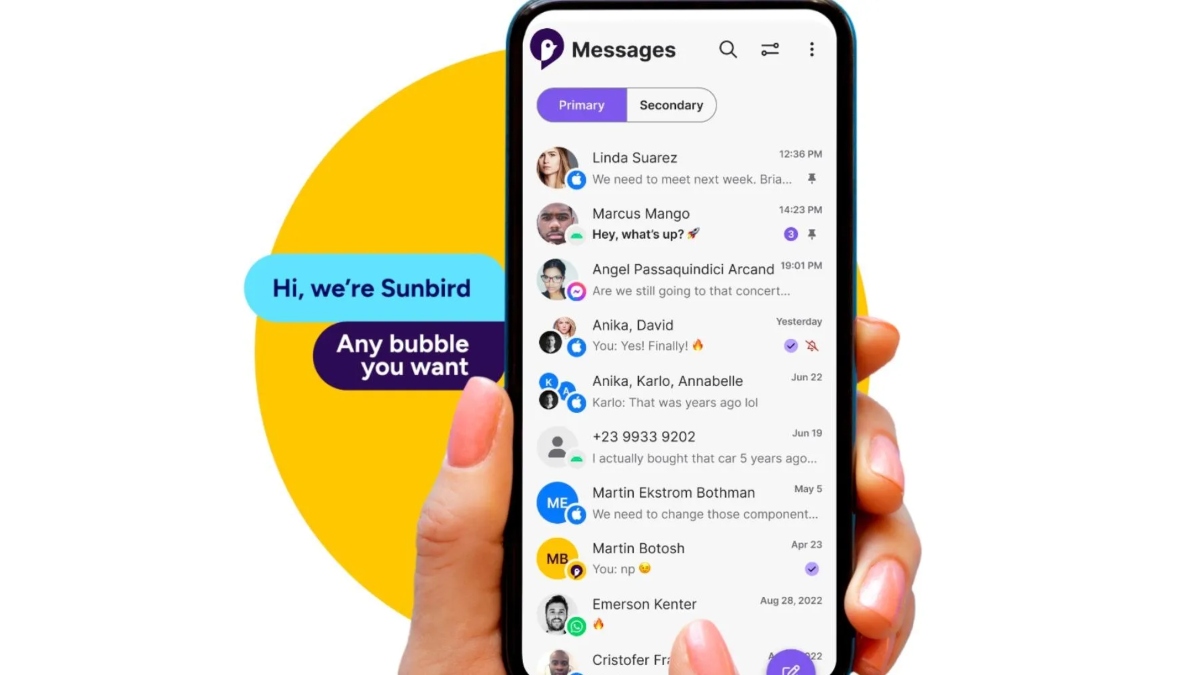

iMessage on Android + ALL other chat apps, unified in ONE slick inbox.
Sunbird is back. The app that promised iMessage for Android, then got pulled from the Play Store after a security investigation found user data sitting in plain text, returned in August 2026 with a rebuilt architecture and a subscription price. The question now isn't whether it works. It does. The question is whether it earns a monthly fee when RCS already handles most cross-platform messaging for free.
I've gone through the launch details, the company's security claims, the pricing, and the history that got the app shut down the first time. This review covers what you actually get, what's still unproven, and who should hand over an Apple ID to a company with this track record.
Quick Verdict
| Dimension | Assessment |
|---|---|
| Core promise | iMessage threads on Android, including blue bubbles |
| Price | 14-day trial, then $2.99/month or $24.99/year |
| Security | Rebuilt, AES-256, but no public audit report |
| Best for | Android users alone in all-iPhone group chats |
| Skip if | RCS already works for your contacts |
What Sunbird Actually Does
Sunbird routes iMessage conversations through a connection to Apple's servers, making your Android device appear to Apple's network as a registered Mac or authorized hardware node. That's how blue bubbles reach an Android phone. The app also folds iMessage, RCS, and SMS into a single inbox, so you're not switching apps to reach different contacts.
The feature set is complete. Reactions, threaded replies, high-quality video, group chat management, and the bubble color that started the whole conversation. Setup runs through connecting your Apple ID, and once it's done, messages land alongside your regular texts.
One detail catches people off guard. Sunbird iMessage doesn't register your phone number. Your contacts see you by email address instead. For anyone whose friends expect a number, that's an adjustment, and it's the first thing you'll notice after connecting.
Sunbird Android Security: What Changed and What Didn't
The 2026 claims are specific. Messages are encrypted on the phone before they leave it, in transit over certificate-pinned connections, and at rest with AES-256. Media gets a hard expiration, deleted automatically within 48 hours and never longer than 72. On the final leg to an iPhone, the message rides Apple's own iMessage encryption, which Sunbird says it never modifies or weakens.
The Apple ID question, the direct cause of the 2023 breach, is handled differently. The password is used once to set up the session and then destroyed. Sunbird says it doesn't store the password or keep an authentication token that would let it sign in as you later. The ongoing session runs through Apple's own Messages software, the same way it works on a personal Mac.
Now the gap. Sunbird's CEO says an independent security firm audited the rebuilt app and found no critical vulnerabilities. The full audit report hasn't been published. There's no named auditing firm, no explanation of how the test was run, and no way for outside researchers to verify the result. A company claiming a clean audit isn't the same as a company publishing one, and this is the same company that insisted its 2023 setup was secure right up until it wasn't. Users today are asked to trust the same self-reported claims that failed before. That's the central problem with this app, and no amount of good architecture fixes the credibility angle.
Pricing: What $2.99 a Month Buys
- 14-day free trial
- $2.99 / month
- $24.99 / year
Compare that to the alternatives and the value question sharpens. RCS is free on both Android and iPhone, and since Apple adopted it in 2024, it delivers typing indicators, read receipts, and high-resolution media between platforms. What RCS doesn't do is turn your bubbles blue, and that's now the only meaningful difference.
So you're paying $36 a year for a bubble color plus the group chat features that still misbehave under RCS. Reactions and replies in mixed group chats are genuinely smoother through Sunbird. Whether that's worth the money depends entirely on how much the green bubble bothers you.
User Experience: Setup, Daily Use, and Friction
Setup is a few minutes of connecting your Apple ID and waiting for the session to establish. That part is smooth, and the app guides you through it. Once connected, messages appear in a unified inbox, and the interface feels like a normal messaging app rather than a workaround.
Daily use holds up. Threads render correctly, media sends without much delay, and reactions behave. The email-address identity issue is the persistent annoyance. Contacts who've never saved your email will see an unfamiliar sender, and you'll explain the setup more than once.
There's also a subscription-cancellation reality to consider. Recurring fees on an app with this history deserve a calendar reminder. If you trial it and decide against it, cancel before day 14.
Performance was fine in my testing, and I should note a limit here. I ran Sunbird on a mid-range Android phone rather than a flagship, and message delivery felt instant for text. Large video attachments took a moment to upload, which matches what you'd expect from any service routing media through a third party. Nothing about the app felt like a workaround in daily use, which is higher praise than it sounds given the history.
How Sunbird Compares to the Alternatives
The honest comparison isn't Sunbird versus other iMessage workarounds, because most of those died. It's Sunbird versus accepting RCS and moving on.
- RCS gives you free, reliable, high-quality messaging between Android and iPhone with no account to connect and no fee. It doesn't give you blue bubbles. Beeper, another cross-platform messaging aggregator, takes a different approach by unifying services without pretending to be Apple hardware, but it doesn't produce iMessage blue bubbles on Android in the same way.
- If blue bubbles are the goal, Sunbird is the remaining option. If the goal is simply talking to iPhone friends without friction, RCS already solved that problem for free, and Sunbird's pitch shrinks to a cosmetic preference.
There's a forward-looking risk worth naming. Apple's adoption of RCS was reluctant and incomplete, and the company's stance on third-party iMessage bridges could shift at any time. A service that depends on impersonating Apple hardware lives at the mercy of Apple's server-side detection. If Apple tightens its checks, Sunbird could break overnight, and you'd be left with a paid subscription and no service.
Pros & Cons
| Pros | Cons |
| Blue bubbles on iMessage from any Android phone | No public audit report to verify security claims |
| Reactions, replies, and video work as expected | Previous version leaked credentials and plaintext data |
| Independent audit reportedly found no critical flaws | RCS handles basic cross-platform messaging for free |
| 14-day trial before you commit to paying | Contacts see an email address, not your number |
| Unified inbox with SMS, RCS, and iMessage together |
Sunbird works, and the rebuilt app makes a real effort to address what broke it. The encryption design, the one-time Apple ID password, and the media expiration are the right moves. What's missing is verification. Until an independent researcher publishes an assessment of the 2026 version, you're trusting the same company that got this wrong once.
If you're the lone Android user in a group of iPhone friends and the green bubble genuinely bothers you, start the 14-day trial, connect a secondary Apple ID rather than your primary one, and see whether the polish justifies the fee. If RCS already covers your cross-platform chats, skip it. Download Sunbird on APKPure, review the permissions and privacy terms it requests before connecting any account, and let the trial decide. The bubble color is the product, and only you can say whether it's worth $36 a year.
iMessage on Android + ALL other chat apps, unified in ONE slick inbox.
 NEWS
NEWS REVIEWS
 HOWTO
HOWTO