

What Is Apple's Screenless Fitness Tracker? Whoop Rival Explained

2026-09-23
Apple is reportedly building a screenless fitness tracker to rival Whoop. Here's how a screenless fitness band works, what it gives up, and when it may launch.
Apple is reportedly building a fitness tracker with no screen at all, and if that sounds backwards for a company that sells watches, that's exactly the point. Bloomberg reported on September 22, 2026 that Apple is developing a screenless health and fitness tracker similar to Whoop's wrist-worn device, part of an effort to rethink its smartwatch lineup. For anyone who wears an Apple Watch to the gym and finds the notifications more distracting than the metrics, this is a device aimed squarely at the gap between "smartwatch" and "get the data and leave me alone." Why would Apple build something so deliberately limited? Because that limit is the feature.
What Apple's Screenless Fitness Tracker Actually Is
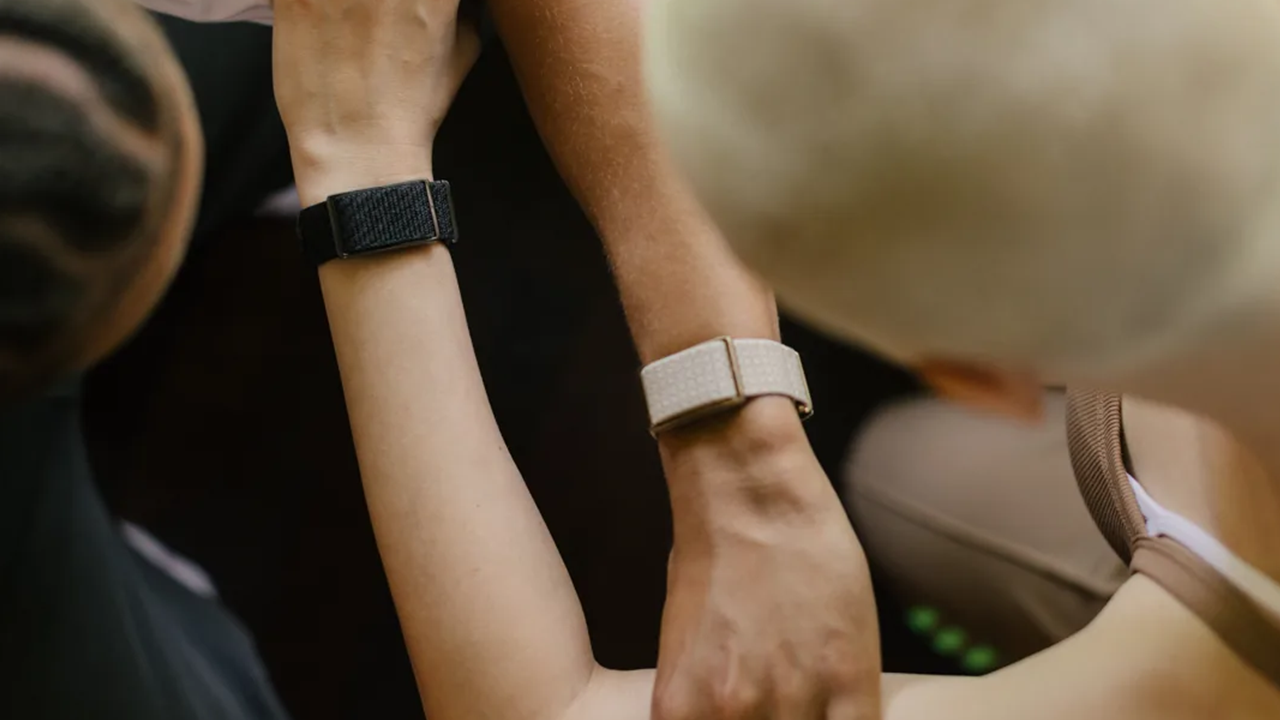
A screenless fitness tracker is a wearable with sensors but no display. It measures what your body does and pushes that data to your phone. That's it. It does nothing else. No watch face. No notifications. Nothing competing for your attention mid-workout. That's the whole idea. Deliberately minimal. By design.
The Bloomberg report describes a prototype with "a thin fabric band with a sensor-equipped computing module." That's a different object from an Apple Watch. The Watch is a small computer you wear on your wrist. This is a sensor strapped to your arm. It just happens to be made by a computer company.
The device is early in development. According to the reporting, it likely wouldn't arrive before 2028 if Apple decides to release it at all. Apple declined to comment. That's standard for unreleased hardware, not a signal either way.
How It Would Work Compared to an Apple Watch
The mechanism is simpler than a smartwatch's by design. Sensors sit against your skin, collect continuous measurements, and hand the data to your phone over Bluetooth. Because there's no screen to power, the battery math changes in your favor. Dramatically so.
Whoop's bands, the comparison point Bloomberg draws, run more than 14 days per charge precisely because they have no display. Whoop also sells MG, or "medical grade," variants with a built-in EKG feature. A screenless Apple device would be chasing that same wearable-forever niche, where you put the band on and forget it exists except when you check the app.
That's the tradeoff in plain terms. You give up on-wrist information, glanceable workouts, and the watch face entirely. In return you get a device you rarely charge. And a screen that never interrupts a set.
Why Apple Would Build This Now
Apple has been adding Whoop-style features to the Apple Watch rather than competing with the form factor directly. The Series 12 arrived with continuous heart rate tracking, a feature Whoop's bands have offered for years. Apple's Health app also gained a "readiness score," a metric already used by Whoop, Fitbit, and Oura, that estimates how ready you're meant to train based on several factors, along with an estimate of biological age.
So Apple has spent the last cycle software-catching up. A screenless band would be the hardware move that complements it, and the reporting suggests the project has backing from the top of the company, including Eddy Cue and Tim Cook. Cue took charge of Apple's health team in October 2025, following Jeff Williams's departure, which puts health squarely under one of Apple's most senior executives.
That's the shape of a genuine Whoop alternative rather than just a feature bump. If Apple ships a band that measures continuously, charges fortnightly, and feeds a mature health app, it would be the first time the company competes with Whoop on Whoop's own terms instead of absorbing one function at a time into the Watch.
Screenless Fitness Band vs Smartwatch: The Tradeoff
The appeal of a screenless fitness tracker is narrower than it sounds. Worth being honest about that.
You'd want one if you hate charging nightly. Also if notifications at the gym derail your focus. And if you already carry a phone and don't need a second screen. Runners and cyclists who check a watch mid-session fall outside that group. Anyone who uses an Apple Watch for payments or calls loses all of it.
The other limitation cuts deeper. A screenless band can't show you anything in the moment. Heart rate zone alerts, timers, and rep counting all become phone-only. If your training depends on live feedback, the device feels like a step back even with Watch-grade sensors.
For a certain kind of user, though, that restraint is the feature. A band that collects your data quietly and never buzzes is a completely different relationship with a wearable than one that sits on your wrist begging for attention.
What This Means for the Apple Watch Lineup
Bloomberg frames the project as part of rethinking the smartwatch lineup, which raises the question of where a screenless band would fit. The likeliest answer is alongside the Watch, not instead of it. A cheap sensor band for the gym and a full smartwatch for everything else is a normal two-device setup, and Apple has never been shy about selling you more than one thing.
That's a point worth stressing: an Apple health wearable without a screen doesn't replace the Watch for most people, because the Watch does far more than fitness. It replaces a bare-bones step tracker, a chest strap, or a Whoop subscription, all of which exist precisely because some users want measurement without a screen. Apple building one would validate that category rather than kill it.
A product this early could change shape, get shelved, or arrive as something closer to an accessory than a standalone device. Reporting on Apple hardware this far ahead of launch has a mixed track record, and the 2028 window is a floor, not a promise. Treat the report as a strong signal of direction and a weak signal of final form.
Should You Wait for It?
If you're shopping for a fitness tracker today, the honest answer is no. A 2028 device, if it ships at all, is years away, and whatever you'd buy now will still be doing its job by then.
What's worth watching is the direction the report points at. Apple is signaling interest in the sensor-first, screen-light end of the wearable market, the same space Whoop and Oura have made a business out of. If you're the type of athlete who wants metrics without a screen in the way, that trend favors you whether or not Apple's specific band ever launches.
On the software side, Apple's Health app is the piece that already exists. You don't need to wait for hardware to start collecting the kind of data a screenless band would surface, since the Health app on iPhone already aggregates readings from the Watch and other sensors you own. If you use an Android phone, health and fitness apps from APKPure can fill the same role until Apple's hardware shows up, though nothing on Android will read data from Apple's health platform directly. Search APKPure for a tracker companion app to install, and you'll find options that pair with the hardware you already own.
For now, the devices that already do this are on the shelf, and the Apple Watch itself covers most of the ground for people who want the screen too. The screenless tracker is a glimpse of where Apple might go, not a reason to hold off on anything you need this year.
If you're curious about the app side of this equation, Apple's Health platform is what a screenless band would feed into, and its data lives behind your device's privacy settings. Any wearable that tracks heart rate and sleep collects sensitive information, so review what a device shares and where it stores your health data before you commit to wearing it every day. That advice holds for the Apple Watch, for Whoop, and for whatever Apple eventually ships here.

 NEWS
NEWS REVIEWS
 HOWTO
HOWTO