

What Is Subnautica? The Underwater Survival Game Explained

2026-07-22
What is Subnautica? Learn how the underwater survival game works, its story, gameplay modes, mobile version, and why it's sold over 18 million copies.
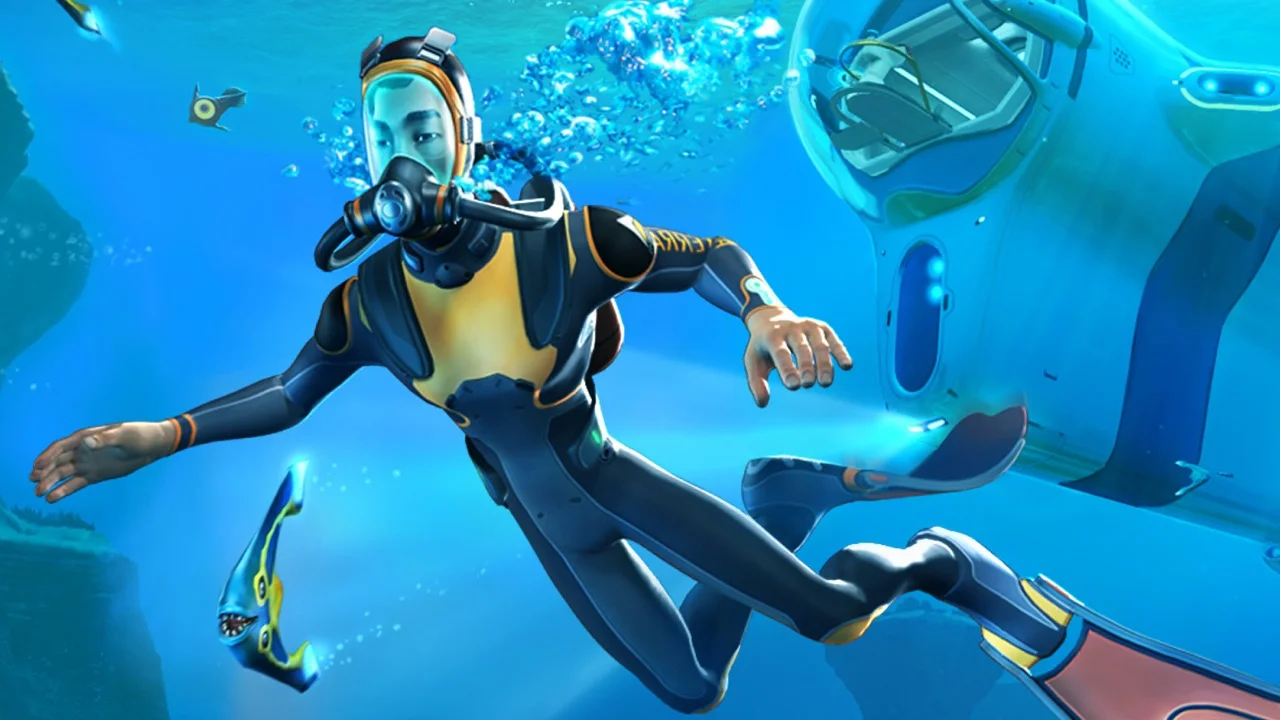

Subnautica is an open world underwater survival game that combines exploration, crafting, and escape planning.

Subnautica is an open-world underwater survival game developed by Unknown Worlds Entertainment. You play as the sole survivor of a crashed spaceship, stranded on an alien ocean planet where every decision revolves around one question: how deep can you go before the deep pushes back? Since its full release in 2018, the Subnautica series has sold over 18 million copies across PC, consoles, and mobile, and a sequel launched in Early Access in May 2026. This guide covers what the Subnautica game is, how its gameplay works, the story behind Planet 4546B, and how it compares to Below Zero and Subnautica 2. If you're hearing the name for the first time or thinking about a Subnautica download, here's everything you need to know, with Subnautica explained from top to bottom.
What Is Subnautica? The Short Answer
Subnautica is a first-person survival adventure game set almost entirely underwater. You start in a tiny lifepod floating on the surface of Planet 4546B, a world covered almost entirely by ocean. The game drops you in without tutorials or quest markers. You figure out what to do by exploring, scanning wreckage, and reading data logs left behind by people who came before you.
The game came from Unknown Worlds Entertainment, a studio that started as a Half-Life mod team and built the Natural Selection series before pivoting to this underwater concept. Subnautica spent nearly four years in Steam Early Access before its full release on PC in January 2018, later launching on PlayStation 4, Xbox, Nintendo Switch, and most recently on Android and iOS in July 2025.
What makes the Subnautica game different from most survival titles is that the world is handcrafted. Not procedurally generated. Every biome, every wreck, every creature encounter is placed with intention. The kelp forest is always in the same spot. The terrifying Reaper Leviathans patrol the same regions. This design choice means the developers could tune the exploration experience in a way that random generation never allows.
How Subnautica Gameplay Works
The core loop in the Subnautica underwater survival experience is simple: dive deeper, find better materials, craft better gear, dive deeper again. Your character needs to manage three things to stay alive: oxygen, food, and water. Run out of oxygen and you drown. Run out of food or water and your health ticks down.
Early game, you're swimming in shallow reefs with a basic oxygen tank, catching fish to cook and collecting scrap metal. Mid game, you've built a Seamoth (a one-person submarine) and can reach 200 meters without worrying about air. Late game, you're piloting a Cyclops, a massive submarine that functions as a mobile base, down into lava zones and crushing depths.
Crafting is the bridge between exploration and progression. You gather resources like titanium, copper, and quartz from the seafloor, and a fabricator in your lifepod turns those raw materials into tools, then into equipment, then into vehicles and habitat modules. The tech tree unlocks as you scan fragments of ancient technology and wrecked ship parts scattered across the ocean floor.
Base building lets you construct underwater habitats. You place corridors, rooms, windows, and functional modules like water filtration machines and indoor plant beds. Depth and pressure affect hull integrity. Build too deep without enough reinforcement and your base floods. The building system is flexible enough that some players treat it as an architecture simulator. Others keep it minimal: a single room with a fabricator and a battery charger.

The Subnautica Story: Mystery on Planet 4546B
Subnautica is a survival game, but it's also a sci-fi mystery. The story unfolds without cutscenes. You piece it together by scanning data terminals, listening to radio messages, and finding abandoned bases.
Here's the setup: In the late 22nd century, the Aurora, a capital-class ship owned by the Alterra Corporation, was on a routine mining mission to Planet 4546B. Something shot it down. You wake up in a lifepod, the only survivor.
As you explore, you discover you're not the first visitor. Decades earlier, another ship called the Degasi crashed on the same planet. Its crew survived for a while before vanishing. You find their logs scattered in abandoned habitats.
The deeper mystery involves an ancient alien civilization known as the Architects. They built research facilities on 4546B to study a lethal pathogen called Kharaa, which had infected billions of their citizens across multiple worlds. They were searching for a cure, and they found one, but their quarantine system is why nothing can leave the planet. Including you.
The story doesn't force itself on you. You can finish the game without reading a single data log if you just follow the radio signals. But players who dig into the lore find a layered narrative about corporate negligence, ancient catastrophe, and one massive creature that's been alive for centuries, waiting.
Subnautica Game Modes Explained
Subnautica has four modes that change how punishing the experience is.
Survival mode is the default. You manage oxygen, food, water, and health. If you die, you drop your items and respawn at your base or lifepod, which is what most players mean when they talk about Subnautica.
Freedom mode removes hunger and thirst. You still need oxygen. You still take damage from creatures and pressure. But you don't have to worry about food or water, which cuts down on the early-game grinding. Good for players who want the exploration and crafting without the survival micromanagement.
Creative mode gives you unlimited resources, no health damage, and no oxygen limits. You can build whatever you want, wherever you want. Some players use this to design elaborate bases. Others use it to explore the map without fear.
Hardcore mode is Survival with one twist: one life. If you die, your save file gets deleted. That's it. The tension of running low on oxygen at 150 meters hits different when you know there's no respawn. A small but dedicated community plays exclusively in Hardcore.
What Makes Subnautica's Open World Stand Out
Most survival games use procedural generation. Minecraft, Rust, Ark, Valheim. Every new world is a different arrangement of biomes and resources. Subnautica doesn't do that. The entire map is hand-designed.
This matters because it lets the developers control the pacing of discovery. The shallow safe zones give way to deeper, darker biomes in a way that feels natural, and the music shifts when you swim past the edge of the kelp forest into open water. You hear something large in the distance. That's not random. That's intentional design.
The biomes in the Subnautica open world range from sunlit coral reefs to bioluminescent caves, lava fields, and deep trenches with their own ecosystems. Each zone has distinct flora and fauna. The Grassy Plateaus look nothing like the Jellyshroom Cave. The Mushroom Forest feels alien in a way that the Safe Shallows don't.
Creatures are the other half of what makes the Subnautica open world memorable. Small fish swim in schools. Predators hunt them. Larger predators hunt those. The game models a basic food chain, so you can use live fish as distractions. And then there are the Leviathans. Massive creatures, some longer than your submarine, that patrol specific territories. You learn where they live. You plan your routes around them. When you hear one nearby, you stop swimming. Pure dread.
Players on Reddit and gaming forums frequently describe Subnautica as scarier than dedicated horror games. Not because of jump scares (those exist too), but because of the dread of descending into darkness and hearing something enormous breathing nearby.
Subnautica is an open world underwater survival game that combines exploration, crafting, and escape planning.
Subnautica, Below Zero, and Subnautica 2: What's the Difference?
The Subnautica universe has grown since the original game. Here's how the three titles relate.
Subnautica (2018) is the original. You crash on Planet 4546B. You survive. You uncover the mystery. You try to escape. Single-player only. The largest map of the three titles.
Subnautica: Below Zero (2021) is a standalone expansion, not a DLC. It's set on the same planet but in a frozen arctic region, where you play as Robin Ayou, a scientist investigating her sister's death. The map is smaller than the original. There are new vehicles (the Seatruck and Snowfox hoverbike) and new creatures. Below Zero was generally well-received but didn't reach the same cultural impact as the first game. Some players felt the smaller map and more guided story made it less mysterious.
Subnautica 2 (2026) is the full sequel. It launched in Early Access on May 14, 2026, developed by Unknown Worlds and published by KRAFTON. The sequel moves to a completely new planet built on Unreal Engine 5, and the biggest change is that Subnautica 2 supports up to four-player co-op multiplayer. You can still play solo if you want. The game sold 4 million copies in its first week and sat at the top of Steam's wishlist rankings for nine months before launch.
How Players and Critics Responded to Subnautica
The Subnautica series has sold over 18 million units worldwide as of 2025. The original game holds a "Very Positive" rating on Steam from over 500,000 reviews. On the PlayStation Store, it averages 4.6 out of 5 stars from over 82,000 ratings.
Any Subnautica review from major gaming outlets tends to highlight the same qualities: the world design, the sense of exploration, and the way the game builds tension without relying on combat. The game won several awards during its Early Access period and appeared on multiple "best of" lists for 2018, which cemented its reputation in the survival genre.
Community sentiment, gathered from Reddit, gaming forums, and player reviews, highlights a few recurring themes. Players love the exploration and the fear of the deep. The moment when you first encounter a Reaper Leviathan is one of the most discussed experiences in survival gaming. On the criticism side, some players find the late-game resource grinding repetitive. A Hacker News commenter put it this way: "The world design does such a good job of offering guided exploration that feels completely natural. Unfortunately, I stopped playing when progressing became too dependent on farming and building."
The modding community has addressed some of these complaints. The Nitrox mod adds multiplayer. Other mods automate resource storage and crafting. None of these are official, but they've extended the game's lifespan considerably.
Quick Summary
Subnautica is a survival game that doesn't play like other survival games. The handcrafted underwater world, the story told through environmental clues, and the creature design that makes you genuinely afraid of the dark set it apart.
 NEWS
NEWS REVIEWS
 HOWTO
HOWTO